

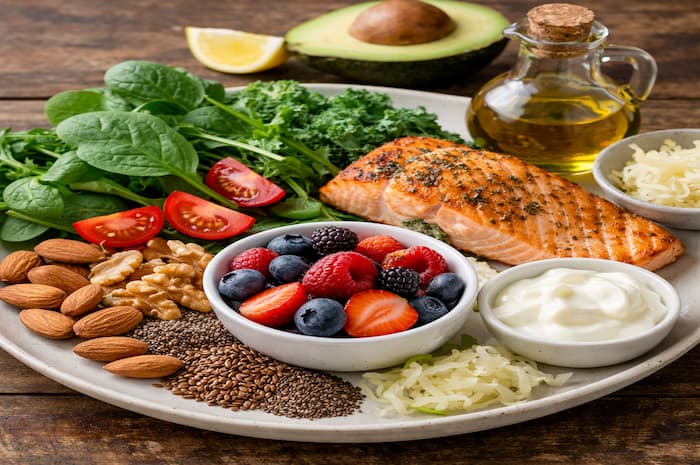
Managing blood sugar depends heavily on how well your body responds to insulin. Certain foods can improve insulin sensitivity, while others make insulin resistance worse. Understanding this difference helps prevent repeated blood sugar spikes and supports long-term metabolic health.
This article explains what insulin sensitivity is, why food matters, and how specific foods help improve insulin response.
Many dietary strategies focus on reversing insulin resistance in muscle, which plays a major role in how effectively glucose is cleared from the bloodstream.
Insulin Sensitivity vs Insulin Resistance
Insulin sensitivity means your body’s cells respond efficiently to insulin, allowing glucose to move from the bloodstream into cells for energy.
Insulin resistance occurs when cells stop responding properly. As a result:
- The pancreas releases more insulin
- Blood sugar remains elevated
- Fat storage and inflammation increase
Over time, insulin resistance can lead to prediabetes, type 2 diabetes, and metabolic dysfunction.
Why Food Choices Affect Insulin Response
Every time you eat, your blood sugar rises. Some foods cause sharp glucose spikes, while others keep blood sugar stable.
Food affects insulin response because:
- Refined carbs raise glucose rapidly
- Fiber slows sugar absorption
- Healthy fats reduce insulin demand
- Inflammation worsens insulin resistance
Eating the wrong foods repeatedly trains the body to overproduce insulin. Eating the right foods helps restore insulin sensitivity.
Which Foods That Improve Insulin Sensitivity
| Food Category | How It Helps Insulin Sensitivity | Examples |
|---|---|---|
| Leafy Green Vegetables | Low in carbohydrates and rich in magnesium, helping improve insulin signaling and slow glucose absorption. | Spinach, kale, Swiss chard |
| Fatty Fish | Omega-3 fats reduce inflammation, a major contributor to insulin resistance. | Salmon, sardines, mackerel |
| Nuts and Seeds | Provide fiber and healthy fats that prevent sudden blood sugar spikes after meals. | Almonds, walnuts, chia seeds, flaxseeds |
| Berries | High in antioxidants and low in sugar, improving insulin sensitivity without large glucose increases. | Blueberries, strawberries, raspberries |
| Olive Oil | Improves insulin function and reduces post-meal blood sugar rises when used instead of refined oils. | Extra-virgin olive oil |
| Fermented Foods | Support gut bacteria, which play a key role in glucose regulation and insulin response. | Yogurt (unsweetened), kefir, sauerkraut |
| High-Quality Protein | Slows digestion and reduces the blood sugar impact of carbohydrates. | Eggs, poultry, tofu, lean meats |
Many of these foods also help avoid blood sugar spikes after meals when combined properly.
Which foods Worsen Insulin Resistance
To improve insulin sensitivity, limit:
- Sugary beverages and desserts
- White bread and refined grains
- Ultra-processed snacks
- Excessive seed oils and trans fats
These foods cause repeated insulin spikes and promote inflammation.
How Do You Add These Foods to Your Daily Diet?
You don’t need extreme diets. Focus on:
- Building meals around protein and vegetables
- Using olive oil instead of refined oils
- Replacing sugary snacks with nuts or berries
- Eating consistently rather than perfectly
Small, repeated changes produce meaningful improvements in insulin sensitivity, especially for people whose blood sugar stays high during fasting.
Key Take away
Insulin resistance is strongly influenced by diet. Choosing whole foods that reduce inflammation and stabilize blood sugar helps restore insulin sensitivity naturally.
Better insulin response leads to steadier energy, healthier metabolism, and improved long-term blood sugar control.