

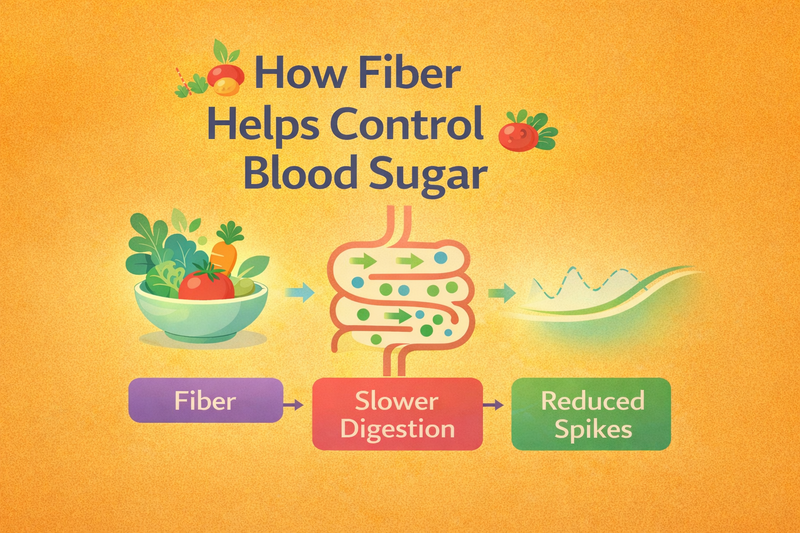
Fiber is a type of carbohydrate that the body cannot fully digest. Unlike sugar and refined carbs, fiber slows down digestion and helps regulate blood sugar levels.
Understanding how fiber works can improve metabolic health and prevent blood sugar spikes.
1. What Is Fiber?
Fiber is found in plant-based foods such as vegetables, fruits, legumes, and whole grains.
There are two main types:
- Soluble fiber (forms a gel-like substance in the gut)
- Insoluble fiber (adds bulk to stool and supports digestion)
Both types support overall metabolic health.
2. How Fiber Affects Blood Sugar
Fiber slows the absorption of glucose into the bloodstream. When you eat high-fiber foods:
- Digestion becomes slower
- Glucose enters the blood gradually
- Insulin response becomes more controlled
This helps prevent sudden blood sugar spikes.
3. Why Fiber Improves Insulin Sensitivity
High-fiber diets are associated with improved insulin sensitivity. This means the body responds more effectively to insulin, helping maintain stable blood sugar levels over time.
Fiber also supports gut health, which plays a role in metabolic regulation.
4. Best Sources of Fiber
Examples of fiber-rich foods include:
- Lentils and beans
- Chia seeds and flaxseeds
- Oats
- Leafy green vegetables
- Berries
Whole foods are more beneficial than processed fiber supplements.
5. How Much Fiber Do You Need?
Most adults need around 25–38 grams of fiber per day, depending on age and sex. Many people consume far less than recommended levels.
Gradually increasing fiber intake while drinking enough water is important.
Simple Summary
Fiber slows digestion, reduces blood sugar spikes, and improves insulin sensitivity. Including more whole plant foods in your diet can support long-term metabolic health.