
Dietary fat plays an important role in energy storage, hormone production, and nutrient absorption. But before the body can use fat, it must first be properly digested and absorbed.
Understanding this process helps explain how fats influence metabolism and overall health.
1. What Happens to Fat in the Stomach?
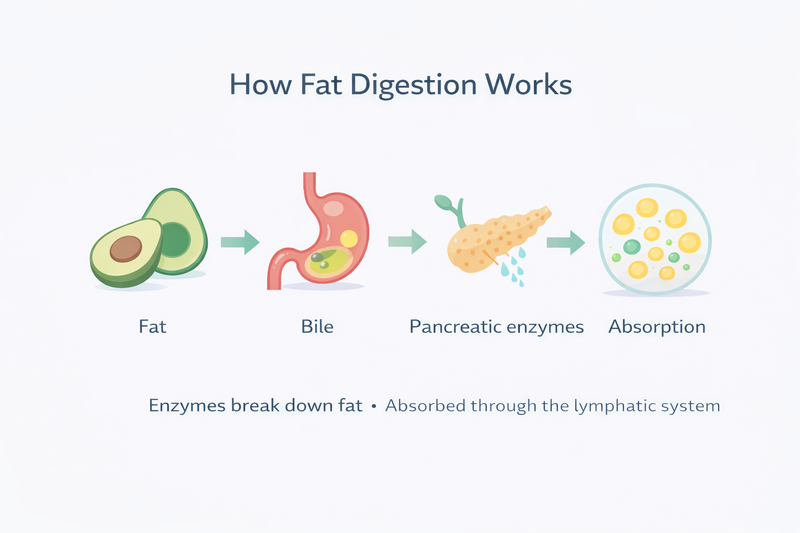
Fat digestion begins slowly in the stomach. Small amounts of fat are broken down by gastric lipase, but most digestion occurs later in the small intestine.
Fat also slows stomach emptying, which can affect how quickly other nutrients enter the bloodstream.
2. The Role of Bile in Fat Digestion
In the small intestine, bile (produced by the liver and stored in the gallbladder) helps break large fat droplets into smaller droplets. This process is called emulsification.
Emulsification increases the surface area of fat, allowing digestive enzymes to work more effectively.
3. Pancreatic Enzymes Break Down Fat
The pancreas releases pancreatic lipase, which breaks triglycerides into fatty acids and monoglycerides.
These smaller molecules can then be absorbed through the intestinal lining.
4. How Fat Is Absorbed
Fatty acids are packaged into structures called chylomicrons and transported through the lymphatic system before entering the bloodstream.
From there, fat can be used for energy or stored for later use.
5. Does Fat Affect Blood Sugar?
Fat does not directly raise blood sugar. However, when eaten with carbohydrates, fat slows digestion and may reduce rapid blood sugar spikes.
This is why balanced meals containing healthy fats can support more stable glucose levels.
Simple Summary
Fat digestion mainly occurs in the small intestine with the help of bile and pancreatic enzymes. While fat does not directly increase blood sugar, it influences digestion speed and overall metabolic balance, when combined with protein.