

1) Why Blood Sugar Rises Quickly After a Meal
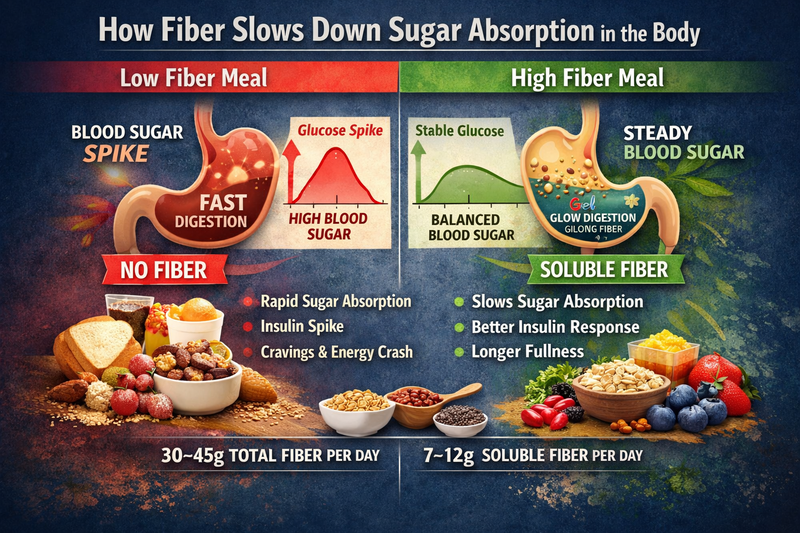
When you eat carbohydrates, your body breaks them down into glucose, which then enters the bloodstream. If this happens too quickly, blood sugar can rise sharply after a meal. That fast rise is often called a blood sugar spike.
This is one reason some meals leave people feeling tired, hungry again soon, or struggling with cravings a few hours later. It is not only about how many carbs you eat. It is also about how fast those carbs are absorbed. Blood sugar responses also depend on what you eat with carbs, so you may also want to read our guide on how protein affects blood sugar.
That is where fiber becomes important. Fiber can slow the speed at which sugar moves through digestion and enters the blood. Instead of a steep spike, the rise can become slower and more gradual. The transcript you shared repeatedly highlights this as one of the main ways fiber supports better blood sugar control.
2) How Fiber Slows Down Sugar Absorption
The most important type for blood sugar control is soluble fiber. When soluble fiber mixes with water in the digestive tract, it forms a gel-like substance. This changes the texture of the meal inside the stomach and small intestine. If you want to understand the bigger digestion process first, you can also read our guide on what happens to carbohydrates after you eat them.
Because of that gel effect, food leaves the stomach more slowly. This is called slower gastric emptying. Glucose is then released and absorbed more gradually instead of rushing into the bloodstream all at once.
In simple words, soluble fiber acts like a natural “speed limiter” for digestion. It does not stop sugar from being absorbed, but it slows the process down. That flatter, slower curve can help reduce large post-meal spikes and make blood sugar feel more stable. This is one of the clearest mechanisms explained in the transcript.
3) Why Soluble Fiber Matters More for Blood Sugar
Not all fiber works in exactly the same way. The transcript explains that there are two main types of fiber: soluble and insoluble. Both are helpful, but soluble fiber is especially important when the goal is to reduce blood sugar spikes.
Soluble fiber is found in foods such as:
- Oats
- Beans
- Lentils
- Chia seeds
- Flaxseeds
- Many fruits and vegetables
According to the transcript, studies focusing specifically on soluble fiber found that around 7–12 grams of soluble fiber per day was linked with improvements in fasting glucose, fasting insulin, and insulin resistance markers. That is important because it suggests the benefit was not only from eating less or losing weight. The fiber itself was changing how the body handled glucose.
4) What Happens Inside the Body When You Eat More Fiber
Fiber does more than help with digestion. In the transcript, it is described as a metabolic tool, because it can influence several systems that affect blood sugar.
Here is what the video explains in simple terms:
A) It slows glucose absorption
Soluble fiber thickens the meal and slows digestion, so glucose enters the bloodstream more gradually.
B) It feeds the gut microbiome
Fiber reaches the gut and becomes food for beneficial bacteria. These bacteria produce short-chain fatty acids, which may support better insulin sensitivity and reduce inflammation.
C) It may help reduce liver glucose output
The transcript explains that high-fiber eating patterns may help lower liver fat. This can matter because excess liver fat is linked with higher fasting blood sugar.
D) It affects blood sugar-related hormones
The transcript mentions hormones such as GLP-1 and PYY, which can support satiety and help the body handle glucose more smoothly.
This is why fiber is not just “roughage.” It can influence digestion, hormones, the microbiome, and metabolic health at the same time.
5) How Much Fiber May Help Support Better Blood Sugar Control
One of the strongest parts of the transcript is that it gives practical intake targets.
The speaker summarizes the “therapeutic range” used in research as:
- 30–45 grams of total fiber per day
- 7–12 grams of soluble fiber per day
The transcript also points out that many people only eat around 12–15 grams of fiber daily, which is far below that range. That gap may explain why many people are “eating some fiber” but still not seeing a noticeable effect on blood sugar.
For ExplainBase readers, the key message is simple:
A little fiber helps, but the real benefits may show up more clearly when intake becomes consistent and high enough. For a practical overview of fiber and ways to increase it safely, you can also see Mayo Clinic’s guide to fiber.
6) Best Foods That Naturally Add Fiber to Meals
The transcript gives many food examples that fit well with ExplainBase’s practical style. Instead of thinking about fiber as a supplement first, it helps to think in terms of whole foods.
Helpful fiber-rich foods mentioned in the transcript:
| Food | Why It Helps |
|---|---|
| Rolled oats | Good source of soluble fiber |
| Chia seeds | Adds fiber and helps slow digestion |
| Flaxseeds | Supports fiber intake and meal balance |
| Berries | Adds fiber with natural sweetness |
| Avocado | Fiber-rich and helps make meals more filling |
| Chickpeas | High-fiber legume for salads and bowls |
| Lentils | One of the strongest fiber-rich meal staples |
| Black beans | Helps build higher-fiber lunches and dinners |
| Kidney beans | Adds fiber to chili, bowls, and mixed meals |
| Edamame | Easy way to increase fiber in savory meals |
| Leafy greens | Adds extra fiber and volume |
| Vegetables | Helps increase total meal fiber naturally |
| Apples | Practical fiber-rich snack option |
| Almonds | Pairs well with fruit for steadier energy |
These foods work well because they can be added to meals people already eat. For example, oats become more powerful when paired with chia and berries. A salad becomes more blood-sugar-friendly when chickpeas or lentils are added. A snack becomes more balanced when fruit is paired with nuts.
7) Simple Meal Ideas That Help Increase Fiber
The transcript gives examples of how to build a day of eating that reaches a higher fiber target without making meals feel extreme.
Breakfast ideas
- Oatmeal with chia, flax, and berries
- Avocado toast with fiber-rich bread
- Greek yogurt bowl with berries, chia, and flax
Lunch ideas
- Lentil and greens bowl
- Chickpea salad
- Black bean burrito bowl
Dinner ideas
- Vegetable stir-fry with edamame and beans
- Black bean chili
- Salmon salad with chickpeas and seeds
The larger lesson is not that everyone must eat these exact meals. The lesson is that stacking fiber sources in the same meal works better than relying on one “healthy” ingredient. A bowl with oats alone is good, but oats plus chia plus berries is much stronger for total fiber.
8) Why Fiber May Also Help With Insulin Resistance
The transcript repeatedly connects fiber with insulin resistance, which is the reduced ability of the body’s cells to respond well to insulin.
When glucose enters the bloodstream more slowly, when gut bacteria produce beneficial compounds, and when appetite-related hormones improve, the body may have an easier time managing blood sugar overall. The transcript also notes that studies found improvements in markers such as fasting glucose, A1c, fasting insulin, and HOMA-IR when fiber intake increased.
That does not mean fiber is a cure by itself. But it does suggest that increasing fiber intake can be a strong supportive habit for people trying to improve metabolic health.
9) Bottom Line
Fiber helps slow sugar absorption by changing the speed of digestion. Soluble fiber forms a gel in the gut, slows stomach emptying, and allows glucose to enter the bloodstream more gradually.
That slower release may help reduce blood sugar spikes after meals, improve fullness, and support better insulin sensitivity over time. The transcript suggests that meaningful benefits often appear when fiber intake becomes consistent and reaches a stronger range, especially from whole foods such as oats, beans, lentils, seeds, fruits, and vegetables.
In short:
Fiber does not remove sugar from food — it changes how fast your body deals with it.
And that slower pace can make a big difference.
Q&A
Q1: Does fiber stop sugar from being absorbed?
No. Fiber does not completely stop sugar absorption. It mainly slows the process, so glucose enters the bloodstream more gradually instead of causing a sharper spike.
Q2: Which type of fiber is best for blood sugar?
Soluble fiber is especially helpful for blood sugar because it forms a gel-like texture during digestion. Foods like oats, lentils, beans, chia seeds, and flaxseeds are useful examples.
Q3: How much fiber should I aim for each day?
Based on the transcript, a practical target discussed in research is around 30–45 grams of total fiber daily, with 7–12 grams of soluble fiber included.
Q4: Can fiber help reduce blood sugar spikes after meals?
Yes. That is one of its main benefits. Fiber slows digestion and glucose absorption, which can help make the rise in blood sugar after eating less sharp.
Q5: Is it better to get fiber from food or supplements?
Whole foods are usually the best place to start because they also provide vitamins, minerals, and other beneficial compounds. The transcript focuses heavily on food-based sources, although it also mentions psyllium as a soluble fiber supplement discussed in research.