

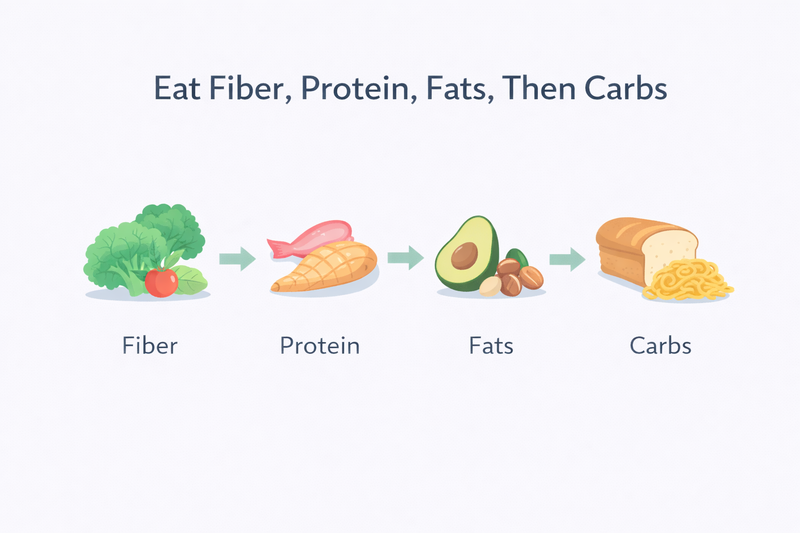
The order in which you eat different foods during a meal can influence how quickly your blood sugar rises. Research suggests that starting with fiber, protein, and fats before eating carbohydrates may help reduce sharp glucose spikes.
Understanding meal sequencing can support better metabolic balance.
1. Why Food Order Matters
When carbohydrates are eaten first, glucose enters the bloodstream quickly. This can cause a rapid rise in blood sugar and a stronger insulin response.
However, when fiber, protein, and fats are eaten before carbohydrates, digestion slows down.
2. Start with Fiber
Vegetables and other high-fiber foods slow gastric emptying and delay glucose absorption. This helps reduce rapid blood sugar spikes after a meal.
Examples:
- Leafy greens
- Broccoli
- Salad
- Lentils
3. Add Protein and Healthy Fats
Protein and healthy fats further slow digestion and support a more controlled insulin response.
Examples:
- Eggs
- Fish
- Chicken
- Avocado
- Nuts
4. Eat Carbohydrates Last
Eating carbohydrates at the end of the meal allows earlier nutrients to moderate glucose absorption.
This approach may help reduce post-meal blood sugar spikes, especially in people with insulin resistance or type 2 diabetes.
5. Is This Strategy for Everyone?
Meal sequencing is generally safe and can be helpful for blood sugar management. However, overall diet quality and total carbohydrate intake still matter.
Food order supports stability but does not replace balanced nutrition.
Simple Summary
Eating fiber, protein, and healthy fats before carbohydrates may reduce rapid blood sugar spikes. Meal order is a practical strategy to improve post-meal glucose control.