

Table of Contents
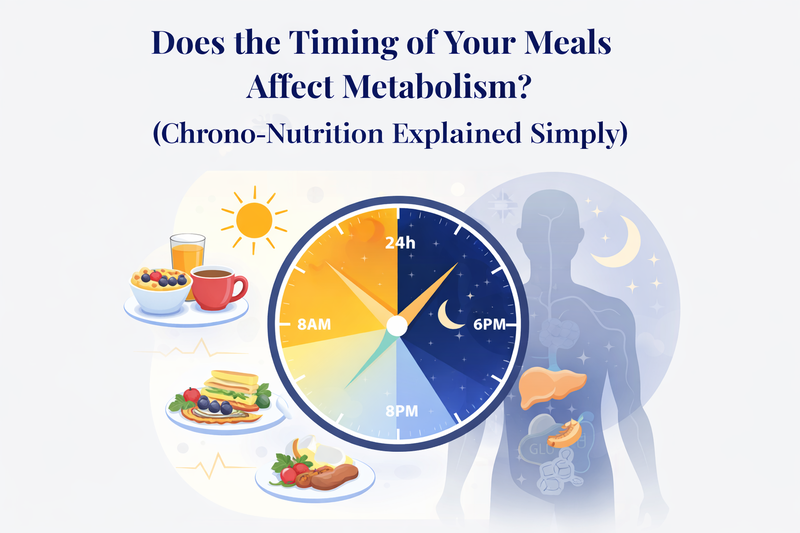
We usually focus on what we eat — calories, protein, carbohydrates, and fats.
But research now suggests something equally important:
When you eat may strongly influence your metabolism, hormones, and long-term health.
This idea is called chrono-nutrition — the science of aligning your meals with your body’s internal clock.
What Is Chrono-Nutrition?
Your body runs on a 24-hour biological cycle known as the circadian rhythm.
Most people know it controls sleep and wake cycles.
But it also controls:
- Insulin sensitivity
- Hormone release
- Hunger signals
- Fat storage
- Energy production
Your brain contains the master clock, but organs like the liver, pancreas, and fat tissue have their own timing systems.
When you eat at times that do not align with these rhythms — especially late at night — your metabolism becomes less efficient.
Why Does Meal Timing Matter?
1. Insulin Sensitivity Changes During the Day
Insulin sensitivity is highest in the morning and early afternoon.
That means:
- Your body clears glucose more efficiently.
- Carbohydrates are more likely to be used for energy.
- Less insulin is required.
As the evening approaches, insulin sensitivity decreases.
Late-night meals require more insulin to manage the same amount of carbohydrates.
High insulin levels signal the body to stop burning fat and start storing energy.
2. Hunger Hormones Follow a Daily Pattern
Two important hormones regulate appetite:
- Ghrelin — the hunger hormone
- Leptin — the fullness hormone
Ghrelin rises before regular meal times.
Leptin normally increases during sleep to suppress hunger.
Eating late at night can disrupt leptin’s rhythm and may lead to increased hunger the next morning.
In simple terms, late eating can make it harder to feel satisfied the next day.
3. Cortisol Peaks in the Morning
Cortisol rises naturally when you wake up. This is known as the cortisol awakening response.
Cortisol helps:
- Raise blood sugar
- Provide energy
- Prepare the body for activity
Because both cortisol and insulin sensitivity are higher in the morning, this period is considered a high-metabolic-efficiency window.
4. Insulin and Glucagon: The Storage and Burning Hormones
Insulin is the storage hormone.
Glucagon is the mobilizing hormone.
When insulin is high:
- Fat burning slows down.
- Energy is stored.
When insulin is low:
- Glucagon helps release stored fat and glycogen.
- The body becomes more metabolically flexible.
If someone eats constantly throughout the day, insulin remains elevated and glucagon does not get a chance to activate.
Metabolic flexibility — the ability to switch between burning glucose and burning fat — requires periods of lower insulin.
How to Apply This Information
You do not need extreme dieting. Simple adjustments can help:
- Eat more calories earlier in the day.
- Avoid heavy late-night meals.
- Allow small gaps between meals.
- Stop eating 2–3 hours before sleep.
- Maintain a consistent daily eating schedule.
Studies suggest that individuals who consume most of their calories in the first half of the day often experience better metabolic outcomes than those who eat late into the evening.
The Bottom Line
Your body does not process food the same way at all hours.
Morning metabolism is different from nighttime metabolism.
Chrono-nutrition reminds us that long-term metabolic health depends not only on what we eat, but also on when we eat.
Aligning your meals with your natural biological rhythm may improve:
- Energy levels
- Hormone balance
- Blood sugar control
- Weight regulation
- Overall metabolic health