

Table of Contents
Fasting & Growth Hormone Explained (The Logical Way)
Fasting has become one of the most talked-about strategies in modern health and nutrition. From weight loss to metabolic health, many people are turning to fasting as a powerful lifestyle tool. One of the most fascinating biological effects of fasting is its influence on human growth hormone (HGH).
Growth hormone plays a critical role in fat metabolism, muscle maintenance, cellular repair, and overall longevity. Interestingly, research shows that fasting can significantly increase growth hormone levels in the body.
But why does this happen? Is it safe? And how does fasting trigger this hormonal shift?
In this article, we’ll logically explain the relationship between fasting and growth hormone, how the body responds during fasting, and why this process may benefit metabolic health.
What Is Growth Hormone?
Growth hormone, also called human growth hormone (HGH), is a hormone produced by the pituitary gland. It is responsible for many essential functions in the body.
Its primary roles include:
- Supporting muscle growth and maintenance
- Stimulating fat breakdown
- Helping tissue repair and regeneration
- Supporting bone density
- Regulating metabolism
Growth hormone is especially important during childhood and adolescence because it drives physical growth. However, even in adulthood, it continues to play a crucial role in maintaining metabolic health and body composition.
Unfortunately, HGH levels naturally decline with age. This decrease can lead to slower metabolism, reduced muscle mass, and increased fat accumulation.
That is why many researchers are interested in natural ways to support healthy growth hormone levels.
Fasting appears to be one of the most effective natural triggers.
How Growth Hormone Normally Works in the Body
Growth hormone is released in pulses throughout the day, but the largest bursts occur during sleep.
Several factors influence HGH release, including:
- Sleep quality
- Exercise intensity
- Nutritional status
- Blood sugar levels
- Insulin levels
When insulin levels are high—such as after eating—growth hormone production tends to decrease. When insulin levels drop, HGH secretion increases.
This relationship between insulin and HGH is one of the key reasons fasting affects growth hormone levels.
What Happens in the Body During Fasting?
Fasting means going without food for a certain period of time. This can range from 12 hours to several days, depending on the fasting approach.
During fasting, the body goes through several metabolic changes.
Stage 1: Lower Insulin Levels
After you stop eating, insulin levels begin to fall. This is important because insulin is the hormone responsible for storing energy from food.
Lower insulin levels signal the body to switch from energy storage mode to energy burning mode.
Stage 2: Increased Fat Burning
Once stored glucose becomes limited, the body begins breaking down stored fat to produce energy.
This process is known as lipolysis, where fat cells release fatty acids into the bloodstream.
Stage 3: Hormonal Adaptations
To protect muscle and maintain energy balance, the body adjusts hormone levels. One of the most important changes is the increase in growth hormone secretion.
Growth hormone helps the body preserve muscle mass while promoting fat breakdown.
This is a key survival mechanism.
Why Fasting Increases Growth Hormone
From an evolutionary perspective, the body needed a way to function during periods of food scarcity.
If fasting simply caused muscle loss and weakness, humans would not have survived long periods without food.
Instead, the body developed a system that protects muscle while mobilizing fat stores.
Growth hormone plays a central role in this adaptation.
During fasting:
- Insulin decreases
- Blood glucose stabilizes
- Fat breakdown increases
- Growth hormone secretion rises
This hormonal shift helps ensure that the body uses fat for energy rather than breaking down muscle tissue.
Scientific Evidence Linking Fasting and Growth Hormone
Multiple studies have explored the connection between fasting and HGH levels.
One study published in the Journal of Clinical Investigation found that fasting for several days can increase growth hormone levels by up to five times.
Researchers believe this happens because the body attempts to:
- Maintain blood sugar balance
- Preserve lean muscle tissue
- Increase fat utilization
Another important factor is the reduction in insulin.
Lower insulin levels remove the suppression of growth hormone production, allowing HGH to increase naturally.
The Role of Insulin in Growth Hormone Regulation
Insulin and growth hormone have an interesting relationship.
When insulin levels are high, the body is in storage mode. Nutrients from food are directed toward glycogen storage, fat storage, and tissue building.
In this state, high growth hormone levels are unnecessary.
However, during fasting, insulin levels fall dramatically.
This signals the body to switch from storing energy to mobilizing stored fuel.
Growth hormone helps facilitate this transition by stimulating fat breakdown.
This is one of the reasons fasting can support weight loss and metabolic flexibility.
How Growth Hormone Supports Fat Loss During Fasting
Growth hormone promotes fat loss through several mechanisms.
1. Increased Lipolysis
HGH stimulates fat cells to release stored fatty acids.
These fatty acids can then be used as fuel by the body.
2. Muscle Preservation
One concern people have about fasting is losing muscle mass.
However, growth hormone helps protect muscle tissue by encouraging the body to burn fat instead.
3. Improved Metabolic Efficiency
Higher growth hormone levels improve the body’s ability to use fat for energy.
This can enhance metabolic flexibility and improve overall metabolic health.
Fasting Duration and Growth Hormone Levels
The longer the fasting period, the more noticeable the hormonal effects can become.
Research suggests that HGH levels may rise significantly after 24 to 48 hours of fasting.
However, even shorter fasting windows—such as intermittent fasting (16:8)—may support healthier hormone patterns.
Short daily fasts can help lower insulin levels regularly, which may indirectly support natural growth hormone production.
Fasting vs Growth Hormone Supplements
Some people turn to supplements or injections in an attempt to increase HGH.
However, these methods are often expensive and may carry potential risks.
Natural lifestyle strategies are generally safer and more sustainable.
These include:
- Fasting
- Strength training
- Deep sleep
- Balanced nutrition
- Stress management
Fasting works naturally with the body’s hormonal system rather than forcing artificial hormone levels.
Additional Health Benefits of Fasting
While growth hormone is an important part of the fasting response, it is not the only benefit.
Fasting may also support:
Improved Insulin Sensitivity
Lower insulin levels help the body respond better to glucose.
Cellular Repair Processes
Fasting may activate autophagy, a process where damaged cells are cleaned up and recycled.
Reduced Inflammation
Many studies suggest fasting can reduce inflammatory markers in the body.
Metabolic Flexibility
Fasting trains the body to switch efficiently between glucose and fat for energy.
These metabolic improvements may contribute to long-term health and disease prevention.
Potential Risks and Who Should Avoid Fasting
Although fasting offers many potential benefits, it is not appropriate for everyone.
People who should be cautious include:
- Pregnant or breastfeeding women
- Individuals with eating disorders
- People with certain medical conditions
- Individuals taking medications that affect blood sugar
Before starting extended fasting protocols, it is always best to consult a healthcare professional.
Moderation and proper guidance are key.
Practical Tips for Fasting Safely
If you want to experience the benefits of fasting while supporting growth hormone production, start gradually.
Helpful tips include:
Start With Short Fasting Windows
Try a 12–14 hour overnight fast before attempting longer fasting periods.
Stay Hydrated
Drink water, herbal tea, or black coffee during fasting periods.
Prioritize Sleep
Growth hormone is naturally released during deep sleep.
Exercise Strategically
Strength training may further stimulate growth hormone release.
Eat Nutrient-Dense Meals
When breaking a fast, focus on protein, healthy fats, and whole foods.
These strategies support hormonal balance and overall metabolic health.
The Logical Takeaway
The relationship between fasting and growth hormone is not random. It is a carefully designed biological response that helped humans survive periods without food.
When food intake stops, the body adapts by:
- Lowering insulin
- Increasing fat breakdown
- Raising growth hormone levels
Growth hormone protects muscle tissue while helping the body access stored energy.
This explains why fasting can support fat loss while maintaining lean mass.
While fasting is not a magic solution, it is a powerful metabolic tool when used responsibly.
Understanding the science behind fasting and growth hormone allows people to make informed decisions about their health and lifestyle.
Most people hear this claim and stop thinking:
“Fasting increases growth hormone, so you burn fat and build muscle.”
That statement is incomplete.
Growth hormone (GH) does rise during fasting — but not for the reason people think, and not to build muscle.
Let’s explain this logically, step by step.
Growth Hormone Is a Survival Hormone First
Growth hormone is not primarily a muscle-building hormone.
Its original biological role is energy preservation during food scarcity.
When food intake drops:
- insulin falls
- external glucose disappears
- the body must protect muscle and vital organs
Growth hormone rises to:
- reduce muscle protein breakdown
- shift fuel use toward fat and ketones
- keep enough glucose available for the brain
This is metabolic protection, not bodybuilding.
Why Fasting Triggers Growth Hormone
During fasting, three things happen together:
First, insulin drops.
Insulin suppresses growth hormone. When insulin stays low, GH secretion increases naturally.
Second, blood sugar is stabilized, not crashed.
Growth hormone helps the body rely more on fat, so glucose is spared for critical tissues.
Third, fat mobilization increases.
Growth hormone signals fat cells to release fatty acids for energy.
So GH rises because insulin is low, not because fasting is trying to grow muscle.
Growth Hormone Does Not Build Muscle Without Insulin
This is where confusion starts.
Muscle growth requires:
- insulin
- amino acids
- resistance training
During fasting:
- insulin is low
- protein intake is zero
- muscle protein synthesis is minimal
So what does growth hormone actually do?
It prevents muscle loss, not muscle gain.
This is why fasting preserves lean mass better than simple calorie restriction, even though it does not build new muscle.
Why Fat Loss Improves Even If Blood Sugar Stays High
Some people notice:
- stable blood sugar
- or even slightly higher fasting glucose
- yet better fat loss
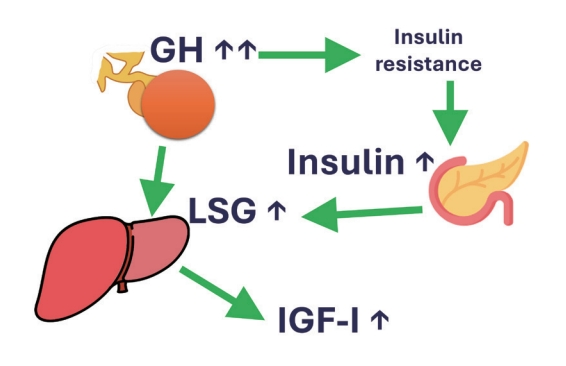
Growth hormone explains this.
Growth hormone:
- blocks fat storage
- increases fat breakdown
- reduces glucose uptake by fat cells
Fat loss improves without needing blood sugar to drop dramatically.
This is fuel redirection, not sugar depletion.
Short Fasting vs Prolonged Fasting
Intermittent fasting (16–24 hours):
- moderate GH increase
- better muscle preservation
- higher fat usage
Prolonged fasting (48+ hours):
- very high GH
- very low insulin
- possible rise in cortisol
- possible slowing of thyroid output
Growth hormone is protective, but other hormones can counteract benefits if fasting is pushed too far.
Exercise and Growth Hormone During Fasting
Resistance training and short bursts of intense exercise also increase growth hormone.
When combined with fasting:
- GH pulses increase
- muscle preservation improves
- fat use rises further
However, muscle growth still requires feeding afterward.
The Real Takeaway
Growth hormone during fasting means:
- better fat mobilization
- better muscle preservation
- improved metabolic flexibility
It does not mean:
- muscle growth without food
- unlimited fasting benefits
- guaranteed blood sugar drops
Growth hormone rises to help you survive fasting, not to turn fasting into a shortcut.
Final Summary
Fasting increases growth hormone because:
- insulin is low
- energy must be conserved
- muscle must be protected
Growth hormone shifts fuel use and preserves lean tissue.
Feed to grow. Fast to preserve.