

Table of Contents
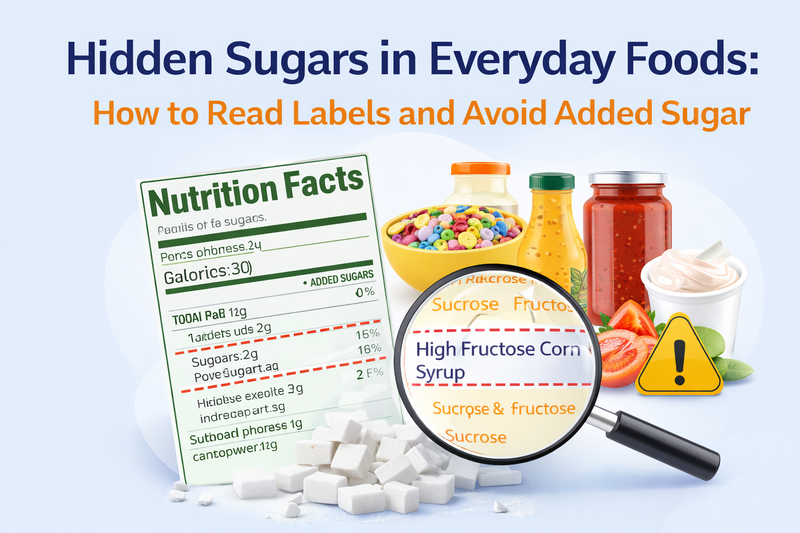
You may believe you are making healthy choices when you pour cereal for breakfast, choose flavored yogurt, or warm up tomato soup for lunch. Yet added sugars are often quietly increasing your daily intake without you noticing. These sweeteners are not limited to desserts or candy bars; they frequently appear in products marketed as “healthy,” “low-fat,” or “diet.”
Learning how to read nutrition labels and recognize added sugars is one of the most practical skills you can develop to support better metabolic health and long-term well-being.
What Are Hidden sugars?
Unleash concealed sugars are sugars already present in processed foods when you purchase them. They are added during manufacturing or included in concentrated forms such as syrups and fruit juices. Because they are built into the product, they are easy to overlook.
There are two important types of sugars to understand.
Why Added Sugar Awareness Matters in 2026
Public awareness about nutrition is increasing, but Added sugars remain a major challenge.
Food marketing often promotes products as:
- “Low fat”
- “Natural”
- “Energy boosting”
- “Fitness friendly”
However, these labels do not always mean low sugar.
Smart Ways to Reduce Added Sugar Intake
Reducing Added sugars does not mean eliminating all enjoyable foods. Instead, focus on smarter choices.
Choose Whole Foods
Fresh fruits, vegetables, whole grains, and unprocessed foods naturally contain less added sugar.
Cook at Home
Preparing meals at home allows you to control ingredients and avoid processed sugar.
Replace Sugary Drinks
Soft drinks, flavored coffees, and energy drinks are major sources of Added sugar. Replace them with water, herbal tea, or unsweetened beverages.
Read Labels Carefully
Understanding ingredient labels can help you quickly spot Added sugars.
Choose Unsweetened Versions
Many products such as yogurt, almond milk, and cereal are available in unsweetened varieties.
How to Identify Added Sugars on Food Labels
Learning to read ingredient labels can help you avoid excess sugar.
Check the Ingredient List
Ingredients are listed in order of quantity. If sugar or syrup appears near the top, the product likely contains high sugar levels.
Watch for Multiple Sugar Sources
Manufacturers sometimes add several types of sugar in small amounts to avoid listing sugar as the first ingredient.
Look at “Added Sugars”
Nutrition labels now include added sugar content, making it easier to identify sweetened products.
Consumers who learn to recognize sugars can make smarter decisions and significantly improve their long-term health.
Recommended Daily Sugar Intake
Health organizations recommend limiting added sugar intake.
General guidelines include:
- Men: No more than 36 grams per day
- Women: No more than 25 grams per day
- Children: Less than 24 grams per day
Unfortunately, many people consume two to three times these amounts due to added sugars.
6. Bread and Baked Goods
Bread is not usually considered sweet, but most commercial bread contains added sugar.
Sugar improves flavor, helps yeast fermentation, and gives bread a golden crust.
Even whole-grain bread can contain 3–5 grams of sugar per slice.
The Health Risks of Added Sugar
Consuming too much sugar can negatively impact health in many ways.
Weight Gain
Sugar is high in calories but low in nutrients. Regular consumption contributes to excess calorie intake and weight gain.
Blood Sugar Spikes
Added sugars cause rapid spikes in blood glucose levels, which may lead to energy crashes and cravings.
Increased Risk of Diabetes
A diet high in added sugars is strongly associated with a higher risk of type 2 diabetes.
Heart Disease
Excess sugar intake has been linked to inflammation, high triglycerides, and increased risk of heart disease.
Fatty Liver Disease
Large amounts of fructose can overload the liver, potentially contributing to non-alcoholic fatty liver disease.
Intrinsic Sugars
Intrinsic sugars occur naturally in whole foods such as fruits, vegetables, and milk. These sugars come packaged with fiber, vitamins, and minerals. In most cases, they are not the main health concern when consumed in normal amounts.
Free (Added) Sugars
Free sugars include sugars added by manufacturers, as well as sugars naturally present in honey, syrups, and fruit juices. These sugars provide energy but little nutritional value. Excess intake of added sugar is strongly linked to metabolic problems.
Why Added Sugar Matters for Your Health
Consistently consuming high amounts of added sugar can contribute to:
- Weight gain
- Obesity
- Insulin resistance
- Type 2 diabetes
- Heart disease
- Increased inflammation
When sugar intake regularly exceeds the body’s ability to manage blood glucose efficiently, it can lead to blood sugar spikes after meals, increasing the risk of long-term metabolic dysfunction.
According to the World Health Organization (WHO), high sugar consumption increases health risks.https://www.who.int/europe/publications/m/item/sugars-factsheet
Common Everyday Foods That Contain concealed sugars
concealed sugars are not just in sweets. They are frequently found in:
- Breakfast cereals
- Flavored yogurts
- Granola bars
- Pasta sauces
- Tomato soup
- Bread
- Salad dressings
- Energy drinks
- “Low-fat” or “Diet” products
Many low-fat products contain added sugar to improve taste after fat has been removed.
How to Read Food Labels for Added Sugar
Learning how to read labels correctly can help you avoid concealed sugars.
Learning to read ingredient lists carefully can also help you make choices that support long-term blood sugar control and improve insulin sensitivity.
Step 1: Check the Nutrition Facts Panel
Look under the carbohydrates section for total sugars and added sugars. Added sugars are the main concern because they are not naturally occurring. Understanding the glycemic index and glycemic load can also help you evaluate how different carbohydrate foods affect blood sugar levels. Understanding how the body processes sugar begins with knowing what happens to carbohydrates after you eat.
Step 2: Scan the Ingredient List Carefully
Sugar appears under many different names. Common examples include:
- Fructose
- Sucrose
- Glucose
- Dextrose
- Maltose
- High fructose corn syrup
- Corn syrup
- Honey
- Molasses
- Cane juice
- Fruit juice concentrate
A useful rule is that many ingredients ending in “-ose” are forms of sugar.
Step 3: Pay Attention to Ingredient Order
Ingredients are listed in order of weight. If a form of sugar appears in the first three ingredients, the product likely contains a high amount of added sugar.
Some manufacturers use multiple types of sugar in smaller amounts so each appears lower on the list. This can make the product seem healthier than it actually is.
Practical Ways to Avoid Added Sugar
You do not need to eliminate all sugar completely. The goal is to reduce unnecessary added sugars and make informed decisions.
Start with these practical steps:
- Choose whole, minimally processed foods
- Cook more meals at home
- Use herbs and spices instead of sugary sauces
- Replace soda with sparkling water and fresh fruit
- Choose plain yogurt instead of flavored versions
- Read labels before purchasing packaged foods
Small changes made consistently can significantly reduce overall sugar intake.
The Bottom Line
concealed sugars are common in everyday foods, including products that appear healthy. The key to avoiding added sugar is awareness and label literacy.
By learning how to read food labels and recognize different names for sugar, you can make smarter food choices and support long-term metabolic health. Even small improvements in daily habits can lead to meaningful health benefits over time.