

When people think about blood sugar, they usually think about carbohydrates. But protein also affects blood sugar — just in a different way. Understanding how protein works can help you build meals that keep your energy stable and prevent sharp spikes.
1. What Happens When You Eat Protein?
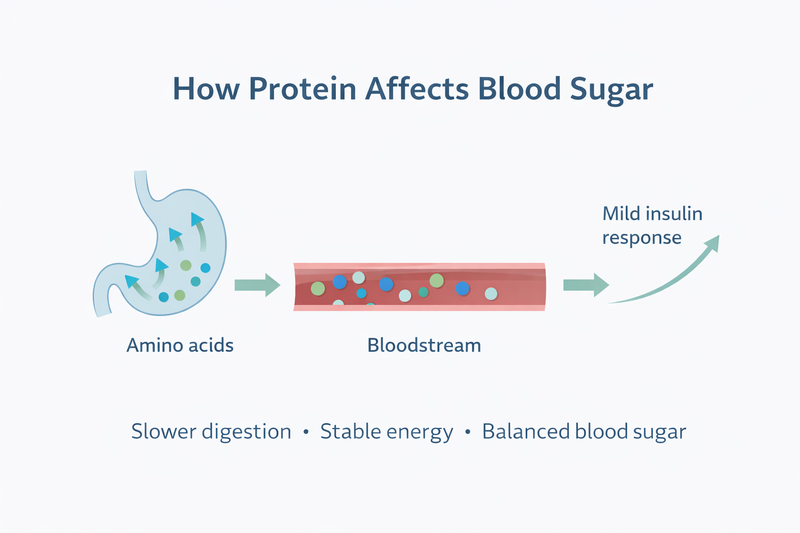
When you eat protein, it is broken down into amino acids. These amino acids enter the bloodstream and are used to repair tissues, support muscle growth, and maintain essential body functions. Unlike carbohydrates, protein does not immediately turn into glucose.
However, protein can still influence insulin release.
2. Does Protein Raise Blood Sugar?
Protein causes a mild insulin response. But unlike refined carbohydrates, protein does not cause sharp blood sugar spikes. Instead, it leads to a slower and more controlled rise in blood sugar and supports stable energy levels.
In healthy individuals, protein alone rarely causes a significant increase in blood glucose.
3. Why Protein Slows Blood Sugar Spikes
Protein slows digestion and stomach emptying. When protein is eaten together with carbohydrates, glucose enters the bloodstream more gradually. Insulin is released in a more balanced way, and blood sugar remains more stable.
This is why adding protein to meals can help reduce sudden blood sugar spikes.
4. Protein and Carbohydrates: A Smart Combination
Pairing protein with carbohydrates improves blood sugar control. For example, rice with chicken, bread with eggs, or oats with Greek yogurt. This combination slows glucose absorption and prevents rapid spikes.
5. Who Should Be Careful?
People with type 2 diabetes, insulin resistance, or advanced kidney disease should monitor total protein intake and consult a healthcare professional if necessary.
Simple Summary
Protein does not behave like sugar. It causes a mild insulin response but helps stabilize blood sugar when eaten with carbohydrates. Adding protein to meals is a practical strategy for maintaining better metabolic balance.