

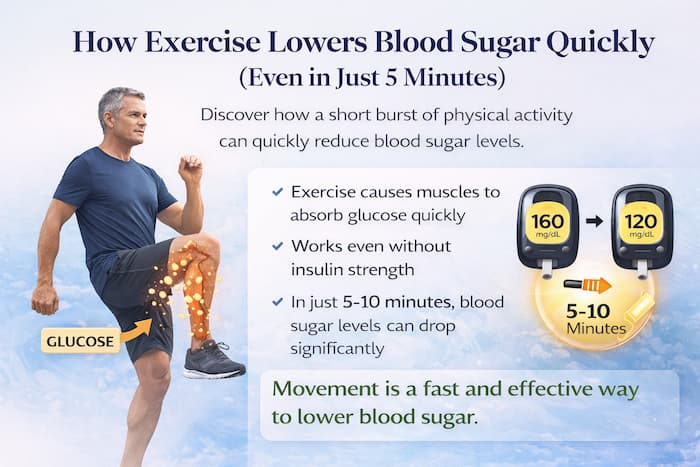
High blood sugar doesn’t always require long workouts or drastic lifestyle changes to improve. In many cases, short bursts of physical activity can lower blood sugar within minutes — even without weight loss or major fitness routines.
This article explains what happens to blood sugar during exercise, why movement lowers glucose so quickly, and how even a 5-minute routine can make a measurable difference.
What Happens to Blood Sugar During Exercise?
When you move your body, your muscles immediately begin using glucose for energy. This process starts as soon as muscles contract.
Key points:
- Muscles absorb glucose directly from the bloodstream
- This process does not rely fully on insulin
- Blood sugar levels can drop during or shortly after activity
This is why exercise can reduce blood sugar even when insulin sensitivity is low.
Why Exercise Lowers Blood Sugar So Quickly
Muscle contraction activates glucose transport through a pathway that works independently of insulin.
This mechanism is especially important in people with insulin resistance, where muscles struggle to absorb glucose at rest, a process explained in how insulin resistance manifests in muscle and raises blood sugar.
This matters because:
- Insulin resistance limits glucose uptake at rest
- Exercise bypasses part of this limitation
- Muscles pull glucose in to meet energy demand
As a result, glucose is cleared from the blood faster than it would be through insulin alone.
How Even 5 Minutes of Exercise Can Help
You don’t need long or intense workouts to see benefits. Short, simple movements can be enough.
Effective short activities include:
- Brisk walking or marching in place
- Bodyweight squats or step-ups
- Light resistance movements
- Gentle cardio that engages large muscle groups
Even 5–10 minutes of movement can:
- Reduce post-meal blood sugar spikes
- Lower elevated readings
- Improve short-term glucose control
However, very intense exercise can temporarily raise blood sugar due to stress hormone release, particularly cortisol, which is discussed further in low cortisol and adrenal insufficiency and its effects on blood sugar.
When Exercise Works Best for Blood Sugar
Exercise is especially effective when:
- Blood sugar is elevated after meals
- You feel sluggish or sedentary
- You’ve been sitting for long periods
Light movement after eating helps muscles absorb circulating glucose before it remains elevated for too long.
Why This Works Without Weight Loss
Lowering blood sugar through exercise is not dependent on fat loss.
This is also why exercise is effective during fasting, even when blood sugar remains elevated due to ongoing liver glucose release, as explained in why blood sugar can stay high during fasting.
That’s because:
- Muscle glucose uptake happens immediately
- Benefits occur before any body composition changes
- Consistency matters more than intensity
This makes short exercise routines especially useful for people who struggle with fatigue, mobility, or time constraints.
Key Takeaway
Exercise lowers blood sugar quickly because contracting muscles absorb glucose directly from the bloodstream, even without strong insulin action. This effect can begin within minutes and does not require long workouts or weight loss.
Regular short bouts of movement are a powerful and practical tool for improving blood sugar control in daily life.
Combining short bouts of movement with smart meal timing can further reduce glucose spikes, as outlined in how to avoid blood sugar spikes after meals.