

What Is Leptin?
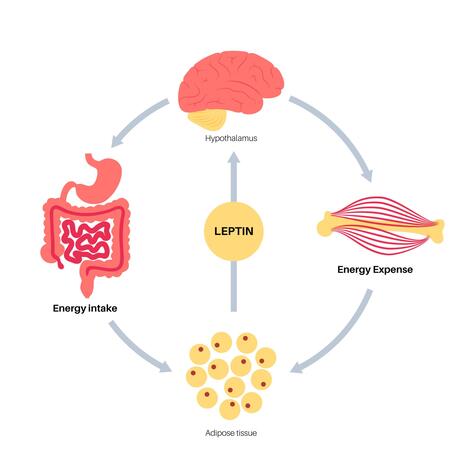
Leptin is a hormone produced by fat cells. Its primary role is to tell your brain how much stored energy your body has available.
When body fat levels are adequate, leptin sends a signal to the brain that energy reserves are sufficient. As a result, appetite remains more controlled and food intake stays balanced.
When energy stores decline — either because of fat loss or reduced calorie intake — leptin levels fall. The brain interprets this drop as a sign that energy is running low. In response, hunger increases and the body may begin conserving energy.
Leptin does not control short-term hunger in the moment. Instead, it regulates long-term energy balance and helps the body adjust to changes in stored fuel.
How Fasting Affects Leptin Levels
When you begin fasting, insulin levels drop and your body shifts from using incoming food to using stored energy.
As this shift happens:
- Fat cells release less leptin
- The brain detects reduced energy availability
- Appetite signals gradually increase
Within 24–48 hours of reduced calorie intake, leptin levels can decline noticeably.
This response is not harmful. It is an adaptive survival mechanism. The body is designed to protect against prolonged energy shortage.
Short-term fasting lowers leptin temporarily — but it does not “damage” the hormone system.
Why Hunger Increases During Longer Fasts
As leptin decreases:
- Hunger becomes stronger
- Food feels more rewarding
- Thoughts about eating increase
Leptin communicates with the hypothalamus — the brain’s energy control center. When leptin drops, the hypothalamus may:
- Increase appetite
- Slightly reduce energy expenditure
- Encourage food-seeking behavior
This explains why prolonged calorie restriction becomes progressively harder over time.
However, intermittent fasting (such as 16–24 hours) usually does not lower leptin enough to cause long-term metabolic slowdown.
Leptin vs. Ghrelin: Understanding Hunger Waves
Leptin often gets confused with ghrelin.
They serve different roles:
- Leptin reflects long-term energy availability
- Ghrelin triggers short-term hunger waves
During fasting:
- Ghrelin rises in cycles (which is why hunger comes in waves)
- Leptin gradually decreases based on overall energy balance
This distinction explains why hunger may feel intense at certain times — yet fade if you do not eat immediately.
Leptin sets the overall energy tone. Ghrelin creates the immediate urge.
What Is Leptin Resistance?
In some people, leptin levels are high — but the brain does not respond properly.
This is known as leptin resistance.
It commonly occurs alongside:
- Chronic high insulin
- Inflammation
- Excess body fat
- Poor sleep
When leptin resistance develops, the brain behaves as if energy is low — even when fat stores are abundant.
The result may include:
- Persistent hunger
- Difficulty losing weight
- Reduced metabolic flexibility
Improving insulin sensitivity and reducing inflammation can help restore normal leptin signaling.
Does Fasting Damage Leptin Long-Term?
Short-term fasting does not permanently lower leptin.
Leptin decreases because calorie intake decreases. Once normal eating resumes, leptin levels adjust accordingly.
Problems may arise only when:
- Calorie restriction is severe
- Dieting is chronic without recovery periods
- Body fat becomes extremely low
In these cases, leptin may drop enough to:
- Reduce metabolic rate
- Increase hunger significantly
- Make fat loss harder to sustain
This is why strategic fasting works better than continuous severe restriction.
Practical Takeaway
If hunger increases during fasting, it does not mean the method is failing.
It means leptin is adjusting to your energy balance.
Short, controlled fasting periods allow the body to shift fuel sources without severe hormonal disruption.
Long-term metabolic health depends on:
- Preserving lean muscle
- Avoiding chronic calorie deprivation
- Maintaining insulin sensitivity
- Managing stress and sleep
Leptin’s function is protective. When understood correctly, it becomes a predictable part of metabolic adaptation — not an obstacle.