

Table of Contents
Blood sugar spikes after meals are common — even when the food seems healthy. These sharp rises in glucose can leave you feeling tired, hungry soon after eating, and can worsen insulin resistance over time.
This article explains what post-meal blood sugar spikes are, why they happen, and how you can reduce them using simple, practical strategies.
What Are Post-Meal Blood Sugar Spikes?
A post-meal blood sugar spike happens when glucose levels rise rapidly after eating and then fall just as quickly. This process occurs because carbohydrates in food are broken down into glucose during digestion.
Normally, the body releases insulin to move glucose from the bloodstream into cells where it can be used for energy. However, when glucose enters the bloodstream faster than the body can process it, blood sugar rises sharply.
This usually occurs when:
- Carbohydrates are absorbed too quickly
- The insulin response is delayed or inefficient
- Muscle glucose uptake is low due to inactivity
Over time, repeated spikes can place stress on insulin signaling. This makes it harder for the body to regulate blood sugar levels effectively and may contribute to metabolic issues such as insulin resistance.
Some common signs of post-meal blood sugar spikes include:
- Feeling sleepy or tired after eating
- Sudden hunger soon after a meal
- Sugar cravings
- Difficulty concentrating
While occasional spikes are normal, frequent spikes may signal that meals are causing glucose to rise too rapidly.
Why Blood Sugar Spikes After Meals
Post-meal spikes are driven by a combination of digestion speed and insulin response.
Common reasons include:
- Meals high in refined carbohydrates
- Low fiber or protein content
- Eating large portions quickly
- Sitting immediately after meals
- Existing insulin resistance in muscle or liver
Many of these causes are linked to reduced insulin sensitivity, which can be improved through dietary choices, as discussed in foods that improve insulin sensitivity and reduce insulin resistance.
Even “healthy” meals can cause spikes if glucose enters the bloodstream faster than it can be used.
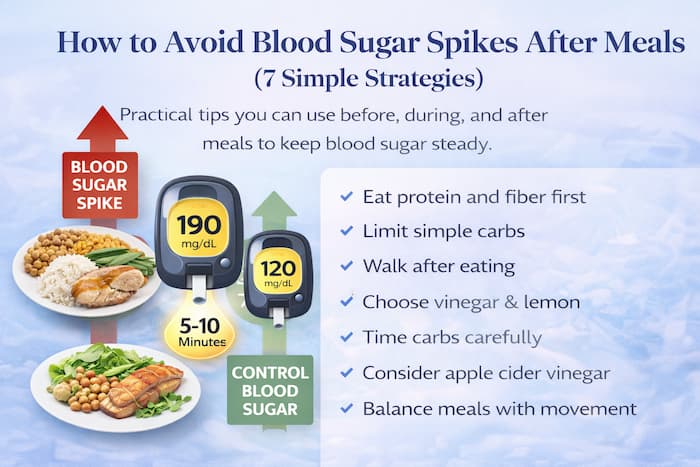
| Strategy | What It Does | Effect on Blood Sugar |
|---|---|---|
| Eat Protein and Fiber First | Slows digestion and delays carbohydrate absorption when meals start with protein or vegetables. | Reduces rapid glucose entry into the bloodstream. |
| Limit Refined Carbohydrates | Replacing processed carbs with whole foods slows glucose absorption. | Prevents sharp post-meal blood sugar spikes. |
| Balance Meals With Healthy Fats | Healthy fats slow stomach emptying and digestion speed. | Leads to steadier blood sugar after meals. |
| Walk After Eating | Muscle movement pulls glucose directly from the blood. | Lowers post-meal blood sugar levels. |
| Avoid Large Portion Sizes | Smaller portions reduce the total glucose load at one time. | Helps prevent large glucose spikes. |
| Use Acidic Foods When Appropriate | Vinegar or lemon slows carbohydrate digestion slightly. | Moderates post-meal glucose rise. |
| Be Consistent With Meal Timing | Regular meal timing supports stable insulin response. | Reduces glucose fluctuations after meals. |
Even short walks after meals can significantly blunt blood sugar spikes by helping muscles absorb circulating glucose, as explained in how exercise lowers blood sugar quickly.
Why Small Habits Make a Big Difference
You don’t need perfection to improve blood sugar control. Combining just two or three of these strategies at each meal can significantly reduce glucose spikes.
This consistency matters because the liver can continue releasing glucose between meals or during longer gaps without food, which explains why blood sugar can stay high during fasting.
Consistency matters more than strict rules.
Key Takeaway
Blood sugar spikes after meals are not caused by one single food — they are the result of how meals are structured and how the body responds to glucose.
By slowing digestion, supporting muscle glucose uptake, and making small habit changes, you can reduce post-meal spikes and support long-term metabolic health.