

Table of Contents
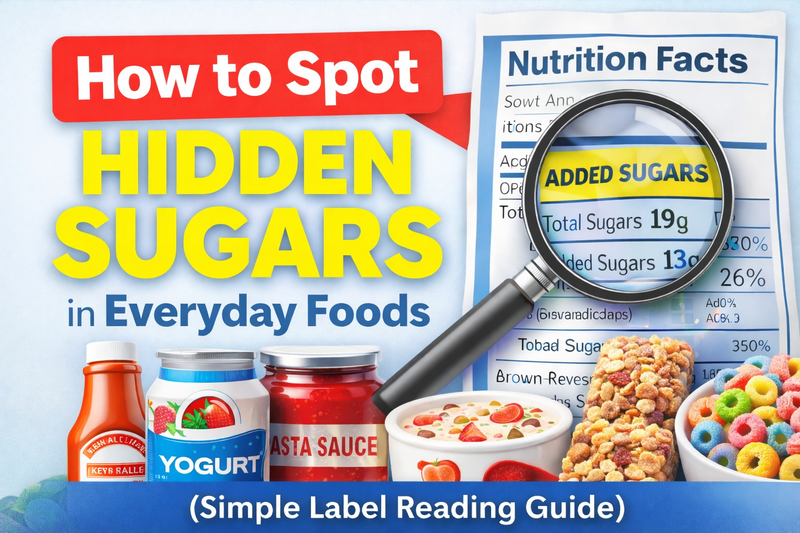
Hidden sugars in everyday foods are more common than most people realize. Many packaged products that appear healthy contain added sugar that can quietly increase your daily intake. Understanding hidden sugars in everyday foods starts with learning how to read food labels correctly.
What Are Hidden Sugars in Everyday Foods?
Hidden sugars are added sugars that manufacturers mix into packaged foods to improve taste, texture, or shelf life. Unlike the natural sugars found in fruits and dairy — which come with fiber, vitamins, and nutrients — added sugars provide calories without meaningful nutritional value.
Many people assume they only consume sugar through obvious sweets like desserts or soda. However, sugar often hides in foods marketed as “healthy.” For example, flavored yogurt, organic salad dressing, granola bars, and even pasta sauce can contain multiple teaspoons of added sugar per serving.
Excess sugar intake is linked to weight gain (especially belly fat), type 2 diabetes, heart disease, tooth decay, and increased inflammation. The real issue is not just eating sweets — it’s unknowingly consuming sugar throughout the day.
Why Food Labels Can Be Misleading
Food packaging can create a false sense of security. Words like “organic,” “natural,” “low-fat,” or “heart healthy” do not mean a product is low in sugar.
This is one of the main reasons hidden sugars in everyday foods often go unnoticed by consumers.
For example:
- A fruit-flavored yogurt can contain more sugar than a glazed donut.
- Salad dressing may contain 10–12 grams of added sugar per serving.
- Barbecue sauce and ketchup often include high amounts of sweeteners.
Many people focus only on calories or fat content and ignore the sugar line on the nutrition label. But low-fat products often compensate by adding extra sugar to improve taste.
The problem is not just the amount — it’s the frequency. Sugar appears in breakfast cereals, condiments, sauces, snack bars, and beverages. By the end of the day, intake can quietly exceed recommended limits.
Common Names of Sugar on Ingredient Lists
Manufacturers rarely list “sugar” plainly and repeatedly. Instead, they use different names. If you don’t recognize them, you may not realize you’re consuming multiple forms of sugar in one product.
Look for terms like:
- High fructose corn syrup
- Cane sugar
- Corn syrup
- Brown rice syrup
- Maltose
- Dextrose
- Fructose
- Glucose
- Sucrose
- Agave nectar
- Fruit juice concentrate
Ingredients are listed in order of quantity. If any of these appear near the top, the product contains a significant amount of added sugar.
If you see several different sugar names listed separately, it’s often a strategy to prevent “sugar” from appearing as the first ingredient — even though the total sugar content is high.
Added Sugar vs Natural Sugar: What’s the Difference?
Natural sugars occur in whole foods like fruits and dairy. These come with fiber, protein, vitamins, and minerals that slow absorption and support overall health.
Added sugars are introduced during processing. They provide sweetness but no essential nutrients. Unlike fruit, a sugary beverage or processed snack lacks fiber, meaning sugar enters the bloodstream quickly and can spike blood glucose levels — which can contribute to insulin resistance over time, as discussed in our article on How Sugar and Ultra-Processed Foods Disrupt Insulin and Metabolism.
The goal isn’t to eliminate all sugar — it’s to reduce added sugar.
How to Read Nutrition Labels the Right Way
Here’s a simple label-reading approach:
1. Check “Added Sugars”
On modern nutrition labels, you’ll see:
- Total Sugars
- Added Sugars
Focus on the “Added Sugars” line. That’s the number that matters most.
2. Look at Serving Size
A product may seem low in sugar until you realize the serving size is small. If you consume double the serving, you double the sugar.
3. Scan the Ingredient List
Check the first 3–5 ingredients. If any form of sugar appears early, reconsider the product.
4. Compare Similar Products
Two brands of the same item (like pasta sauce or yogurt) can differ drastically in sugar content. Choosing wisely makes a big difference over time.
Smart Ways to Reduce Hidden Sugar Intake
- Choose plain yogurt and add fresh fruit.
- Use olive oil and vinegar instead of sugary dressings.
- Select sauces labeled “no added sugar.”
- Cook more meals at home.
- Drink water instead of sweetened beverages.
- Read every label — even on products labeled “healthy.”
Awareness is the first step. Once you know where sugar hides, you gain control over your daily intake — and even simple movement after meals can make a difference, as we explain in How Exercise Can Lower Blood Sugar (Even in Just 5 Minutes).
Hidden sugars are not just in desserts — they are in everyday foods. Learning to read labels carefully helps you avoid unnecessary added sugar and make smarter nutrition decisions, and understanding how eating patterns influence glucose response — as discussed in Does the Order You Eat Food Affect Blood Sugar? — can further support better blood sugar control. Becoming aware of hidden sugars in everyday foods allows you to take control of your daily sugar intake.