

Table of Contents
Have you ever gone to bed with your blood sugar looking fine, only to wake up with a high reading in the morning?
One possible reason is something called the Somogyi effect.
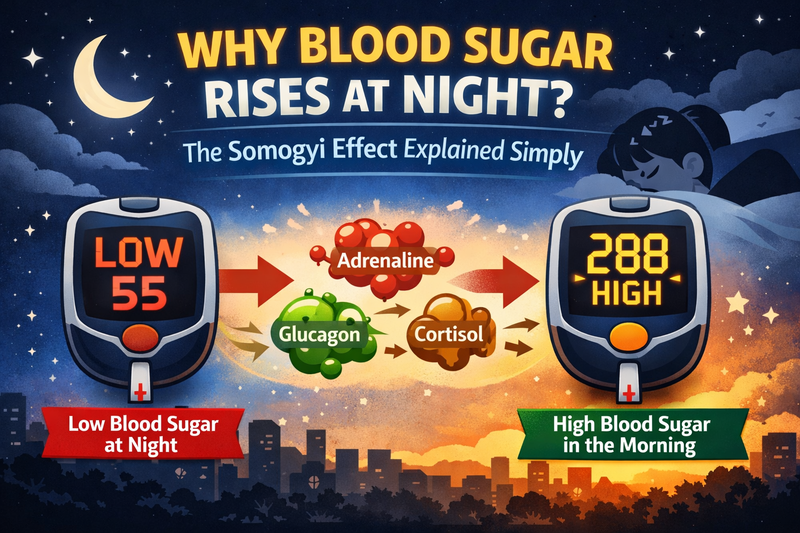
This happens when blood sugar drops too low during the night, and the body responds by releasing hormones that push it back up — sometimes too much. The result? You wake up with high morning blood sugar, even though the real problem may have been low blood sugar a few hours earlier. DAWN PHENOMENON VS SOMOGYI EFFE…
In this article, we’ll explain the Somogyi effect in simple language, how it differs from the dawn phenomenon, and what signs may help you spot the difference.
What Is the Somogyi Effect?
The Somogyi effect is a pattern where:
- Blood sugar drops too low during the night
- The body treats that as an emergency
- Stress hormones are released to raise blood sugar
- Blood sugar rebounds too high by morning
In simple words:
Your blood sugar goes too low first, then your body over-corrects, causing a high reading when you wake up. DAWN PHENOMENON VS SOMOGYI EFFE…
Why Does It Happen?
The most common reason is too much insulin before bed.
If a person takes more bedtime insulin than their body needs, blood sugar may fall too low while they are sleeping. To protect itself, the body releases counter-regulatory hormones such as:
- Glucagon
- Epinephrine (adrenaline)
- Cortisol
- Growth hormone
These hormones tell the liver to release stored glucose into the bloodstream. That can cause a rebound spike in blood sugar by morning. DAWN PHENOMENON VS SOMOGYI EFFE…
What Are the Symptoms?
Some people do not notice symptoms during the night. But possible clues include:
- High blood sugar in the morning
- Night sweats
- Nightmares
- Waking up with a headache
- Rapid heartbeat during the night
- Feeling tired or foggy in the morning
- Blurred vision
- Increased thirst
If you often wake up with high blood sugar despite increasing insulin, the Somogyi effect may be worth discussing with a healthcare professional. DAWN PHENOMENON VS SOMOGYI EFFE…
The Key Time: 2 AM to 4 AM
This is the most important clue.
To tell whether the Somogyi effect might be happening, many clinicians look at blood sugar levels between 2 AM and 4 AM.
- If blood sugar is low during that time, but high in the morning, that supports the Somogyi effect
- If blood sugar is already high during that time and keeps rising, that may point more toward the dawn phenomenon instead DAWN PHENOMENON VS SOMOGYI EFFE…
This is why a single morning reading does not always tell the full story.
Somogyi Effect vs Dawn Phenomenon: What’s the Difference?
Both conditions can cause high blood sugar in the morning, but the cause is different.
Somogyi Effect
- Blood sugar drops too low during the night
- The body reacts with stress hormones
- Blood sugar rebounds high by morning
- Often linked to too much bedtime insulin
Dawn Phenomenon
- Blood sugar does not drop low first
- It gradually rises in the early morning hours
- This may happen due to normal hormone changes before waking
- It may mean the body needs more insulin or a timing adjustment DAWN PHENOMENON VS SOMOGYI EFFE…
Simple memory trick
- Somogyi = yo-yo → blood sugar goes down, then up
- Dawn = sunrise → blood sugar just rises steadily
That’s the easiest way to remember it. DAWN PHENOMENON VS SOMOGYI EFFE…
Why This Matters
This matters because the treatment is not the same.
If someone mistakes the Somogyi effect for ordinary high blood sugar and simply increases bedtime insulin, the problem can get worse.
That’s because the real issue may be that the insulin dose was already too high, causing a nighttime crash in the first place. DAWN PHENOMENON VS SOMOGYI EFFE…
How Is the Somogyi Effect Usually Managed?
If the Somogyi effect is confirmed, common strategies may include:
- Reducing bedtime insulin
- Adjusting insulin timing
- Having an appropriate bedtime snack in some cases
- Checking overnight blood sugar patterns
- Reviewing medications and habits with a healthcare professional
In contrast, the dawn phenomenon may require more insulin or a change in when insulin is taken. That’s why it’s so important not to guess based only on a morning reading. DAWN PHENOMENON VS SOMOGYI EFFE…
When to Talk to a Doctor
You should speak with a doctor or diabetes care provider if you:
- Frequently wake up with high blood sugar
- Have night sweats, headaches, or nightmares
- Notice your morning numbers stay high even after insulin changes
- Suspect overnight lows
- Use insulin and are unsure whether your pattern is Somogyi effect or dawn phenomenon
A doctor may recommend checking blood sugar overnight or using a continuous glucose monitor (CGM) to see what is really happening.
Final Thoughts
The Somogyi effect is one possible reason for high blood sugar in the morning.
It can happen when blood sugar falls too low overnight, causing the body to release hormones that push it too high by the time you wake up.
The tricky part is that it can look similar to the dawn phenomenon — but the treatment may be completely different.
If your morning readings are high, the key question is not just “How high is it when I wake up?”
It may also be: “What happened between 2 AM and 4 AM?”
Q&A: Common Questions About the Somogyi Effect
1. What is the Somogyi effect in simple words?
It means your blood sugar drops too low during the night, and then your body pushes it too high by morning as a rebound response.
2. Can the Somogyi effect cause high blood sugar in the morning?
Yes. That is one of the main signs. A person may wake up with high blood sugar, even though the real problem was a low blood sugar episode overnight. DAWN PHENOMENON VS SOMOGYI EFFE…
3. What time does the Somogyi effect usually happen?
The low blood sugar part often happens between 2 AM and 4 AM, which is why that time window is often checked when doctors want to tell it apart from the dawn phenomenon. DAWN PHENOMENON VS SOMOGYI EFFE…
4. What causes the Somogyi effect?
A common cause is too much insulin before bed, though other factors like long gaps without food or unusual activity may also contribute. DAWN PHENOMENON VS SOMOGYI EFFE…
5. How is the Somogyi effect different from the dawn phenomenon?
- Somogyi effect: blood sugar goes low first, then rebounds high
- Dawn phenomenon: blood sugar gradually rises overnight without that low dip DAWN PHENOMENON VS SOMOGYI EFFE…
6. Should I increase insulin if my morning blood sugar is high?
Not automatically. If the cause is the Somogyi effect, increasing insulin may actually make the problem worse. It’s important to check overnight patterns first and speak with a healthcare professional. DAWN PHENOMENON VS SOMOGYI EFFE…
7. Can a bedtime snack help?
In some cases, yes. A healthcare professional may suggest a bedtime snack, a lower insulin dose, or both — depending on the person’s blood sugar pattern. DAWN PHENOMENON VS SOMOGYI EFFE…
Medical Disclaimer
This article is for educational purposes only and is not medical advice. If you have diabetes or concerns about nighttime or morning blood sugar levels, speak with your doctor or diabetes care provider before making changes to insulin, medication, or meal timing.