

Table of Contents
Fasting blood sugar levels are often used as a marker of metabolic health. When practicing intermittent fasting, many people check their blood sugar to see whether fasting is helping or harming their glucose control. However, fasting can temporarily change blood sugar readings, which can be confusing without proper context.
This confusion often arises because blood sugar can stay high during fasting, even when no food is consumed.
Understanding normal fasting blood sugar levels during intermittent fasting helps you interpret your glucose readings more accurately.
What Are Fasting Blood Sugar Levels?
Fasting blood sugar refers to the amount of glucose present in the blood after not eating for several hours, usually 8 to 12 hours. In general, fasting blood sugar levels are measured first thing in the morning before food or drinks are consumed.
For most people, fasting blood sugar levels fall within a relatively narrow range. These numbers reflect how well the body regulates glucose when no food is coming in. The liver releases stored glucose during fasting to maintain energy supply, while insulin helps keep blood sugar from rising too high.
Fasting blood sugar is different from post-meal blood sugar, which rises temporarily after eating and then falls as insulin moves glucose into cells.
Why Fasting Blood Sugar Changes During Intermittent Fasting
During intermittent fasting, the body shifts its energy strategy. Instead of relying on frequent food intake, it begins using stored glucose and fat for fuel. As fasting continues, insulin levels usually decrease, which is one of the reasons intermittent fasting is often associated with improved metabolic health.
However, blood sugar does not always drop immediately during fasting. In some cases, it may stay the same or even rise slightly. This can happen because the liver releases glucose into the bloodstream to maintain stable energy levels, especially in the early stages of fasting.
Hormones such as cortisol and glucagon also play a role. These hormones, associated with the dawn phenomenon, help prevent blood sugar from falling too low, particularly during longer fasting periods. As a result, fasting blood sugar readings during intermittent fasting may look different from what people expect, especially when the body is still adapting.
How to Interpret Blood Sugar Numbers While Fasting
When interpreting fasting blood sugar levels during intermittent fasting, context is important. A single reading does not tell the full story. Blood sugar levels may vary based on stress, sleep quality, physical activity, and how long the person has been practicing fasting.
In the early stages of intermittent fasting, temporary fluctuations are common. Over time, as the body becomes more metabolically flexible, fasting blood sugar levels may become more stable. The goal is not to chase perfect numbers each day, but to observe overall trends over weeks and months.
It is also important to avoid frequent testing driven by anxiety. Obsessively checking blood sugar can increase stress, which itself may raise glucose levels. Instead, occasional monitoring combined with how the body feels—such as energy levels, hunger control, and mental clarity—provides a more balanced picture.
Over time, supportive nutrition choices can help improve insulin sensitivity and stabilize fasting blood sugar levels.
What Are Normal Fasting Blood Sugar Levels During Intermittent Fasting?
Intermittent fasting has become one of the most popular lifestyle approaches for improving metabolic health, supporting weight management, and enhancing insulin sensitivity. As more people adopt fasting schedules like 16:8, 18:6, or even 24-hour fasts, a common question arises: what are normal fasting blood sugar levels during intermittent fasting?
Understanding how blood glucose behaves while fasting can help you interpret readings correctly, avoid unnecessary worry, and recognize when something may be off. This article explores normal fasting blood sugar ranges, how intermittent fasting affects glucose levels, what fluctuations are expected, and when to seek medical advice.
Understanding Fasting Blood Sugar
Fasting blood sugar (also called fasting blood glucose) measures the amount of glucose in your bloodstream after a period without eating, usually 8–12 hours. It reflects how efficiently your body regulates blood sugar when insulin levels are low.
Under normal circumstances, the body maintains blood glucose within a narrow range by balancing insulin, glucagon, and stored energy sources such as glycogen and fat.
Standard Fasting Blood Sugar Ranges
For most adults, standard fasting blood sugar levels are categorized as:
Normal: 70–99 mg/dL (3.9–5.5 mmol/L)
Prediabetes: 100–125 mg/dL (5.6–6.9 mmol/L)
Diabetes: 126 mg/dL (7.0 mmol/L) or higher on two separate tests
These values are typically measured after an overnight fast. During intermittent fasting, however, the context changes slightly.
How Intermittent Fasting Affects Blood Sugar
Intermittent fasting extends the fasting window beyond the typical overnight period. As the fast progresses, the body transitions through several metabolic phases:
Glycogen depletion – Stored glucose in the liver is used for energy
Lower insulin levels – Insulin drops, allowing fat burning to increase
Gluconeogenesis – The liver produces small amounts of glucose from non-carbohydrate sources
Fat and ketone utilization – Fat becomes the primary fuel source
Because of these changes, blood sugar readings during intermittent fasting may look different from standard fasting measurements.
Normal Blood Sugar Levels During Intermittent Fasting
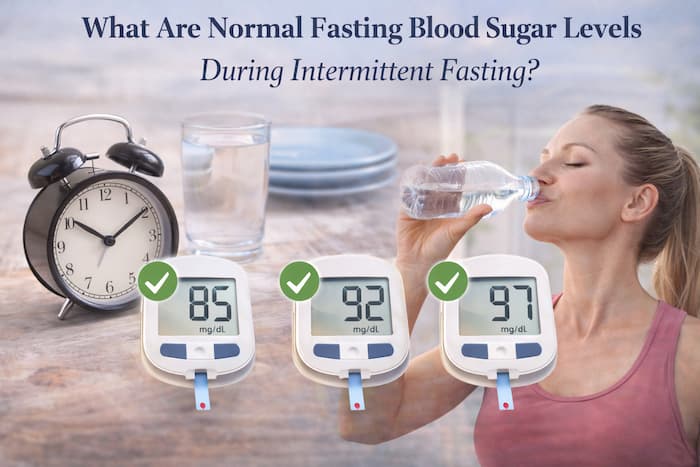
For most healthy individuals practicing intermittent fasting, normal fasting blood sugar levels generally fall between 65 and 100 mg/dL (3.6–5.5 mmol/L).
Here’s how readings may vary depending on the fasting stage:
Early Fasting (12–16 hours)
Typical range: 70–95 mg/dL
Blood sugar often stabilizes or slightly decreases
Insulin sensitivity improves
Extended Fasting (18–24 hours)
Typical range: 65–90 mg/dL
Liver glycogen is mostly depleted
Fat becomes the primary energy source
Long-Term Intermittent Fasting Adaptation
Some people consistently see readings in the 60s or low 70s
This can be normal if no symptoms are present
Often reflects improved metabolic flexibility
Lower numbers during fasting do not automatically indicate hypoglycemia, especially in people adapted to fasting.
Is Low Blood Sugar During Fasting Dangerous?
Blood sugar below 70 mg/dL is often labeled as hypoglycemia, but context matters.
When Low Blood Sugar Is Usually Normal
If blood sugar is between 60–70 mg/dL and you feel fine, it’s typically not a concern. Fasting-adapted individuals often maintain lower glucose levels because their bodies efficiently use fat and ketones for energy.
Symptoms That May Signal a Problem
Low blood sugar may be concerning if accompanied by symptoms such as:
Dizziness or lightheadedness
Shakiness or tremors
Confusion or difficulty concentrating
Excessive sweating
Rapid heartbeat
If symptoms occur, breaking the fast is recommended.
Why Blood Sugar Sometimes Rises During Fasting
Some people are surprised to see higher blood sugar readings during intermittent fasting, especially in the morning. This can happen due to:
The Dawn Phenomenon
In the early morning hours, hormones like cortisol and growth hormone rise, signaling the liver to release glucose. This natural response helps prepare the body for waking but may temporarily elevate blood sugar.
Stress and Poor Sleep
Stress hormones increase glucose production. Inadequate sleep or psychological stress can raise fasting blood sugar even without food intake.
Insulin Resistance
In individuals with insulin resistance or type 2 diabetes, the liver may release more glucose than necessary during fasting.
Blood Sugar Differences Based on Fasting Style
16:8 Intermittent Fasting
Most common method
Blood sugar usually stays within standard fasting ranges
Ideal for beginners
18:6 or 20:4 Fasting
Greater insulin reduction
Slightly lower average glucose levels
Improved metabolic switching
Alternate-Day or 24-Hour Fasts
Blood sugar often stabilizes at lower levels
Requires careful monitoring for those with medical conditions
Intermittent Fasting and Prediabetes or Diabetes
People with prediabetes or type 2 diabetes may experience significant improvements in fasting blood sugar over time with intermittent fasting. However, responses vary.
Potential Benefits
Improved insulin sensitivity
Reduced fasting glucose over weeks or months
Lower HbA1c levels
Important Precautions
Medication dosages may need adjustment
Risk of hypoglycemia increases with insulin or sulfonylureas
Medical supervision is strongly recommended
How to Monitor Blood Sugar While Intermittent Fasting
To understand your body’s response, consider these tips:
Measure blood sugar at the same time daily
Track readings alongside fasting duration
Note sleep quality, stress, and physical activity
Avoid frequent testing that increases anxiety
Continuous glucose monitors (CGMs) can offer valuable insights, especially during extended fasting.
When to Seek Medical Advice
Consult a healthcare professional if:
Fasting blood sugar is consistently above 125 mg/dL
Blood sugar frequently drops below 60 mg/dL with symptoms
You feel unwell, weak, or confused during fasting
You have diabetes or take glucose-lowering medication
Final Thoughts
Normal fasting blood sugar levels during intermittent fasting typically range from 65 to 100 mg/dL, with slight variations depending on fasting length, metabolic health, and individual adaptation. Lower readings can be normal and healthy, especially in fasting-adapted individuals, as long as symptoms are absent.
Intermittent fasting can be a powerful tool for improving blood sugar control, but it’s not one-size-fits-all. Listening to your body, monitoring trends rather than single readings, and seeking medical guidance when needed are key to fasting safely and effectively.
Key Takeaway
Fasting blood sugar levels during intermittent fasting can vary, especially during the adaptation phase. Temporary changes do not necessarily indicate a problem. Understanding how the body regulates glucose during fasting helps reduce confusion and supports a more realistic view of metabolic health over time.