
When you eat carbohydrates, your body begins breaking them down almost immediately. The goal is simple: convert them into a usable form of energy called glucose.
1️⃣ Digestion Begins in the Mouth
Carbohydrate digestion starts when enzymes in your saliva begin breaking complex carbs into smaller molecules. Once the food reaches your stomach and small intestine, the process continues.
2️⃣ Breakdown in the Small Intestine
In the small intestine, carbohydrates are broken down into simple sugars — mainly glucose. These sugars pass through the intestinal wall and enter the bloodstream.
This is when your blood sugar rises.
3️⃣ Insulin Is Released
As blood glucose levels increase, your pancreas releases insulin.
Insulin acts like a key. It helps glucose move from your bloodstream into your cells.
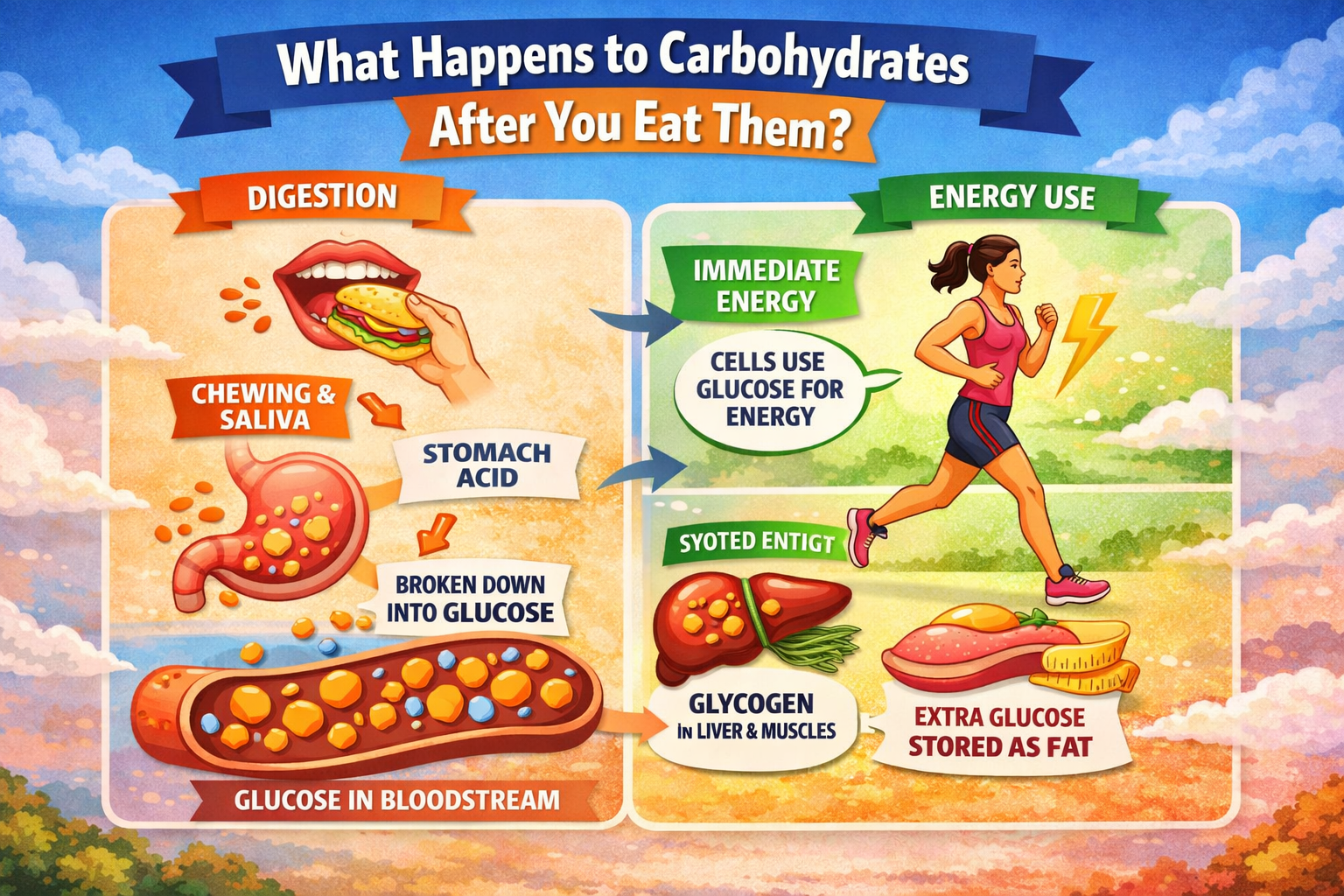
Your cells use glucose for:
- Immediate energy
- Stored energy (glycogen in liver and muscles)
- Fat storage if intake exceeds need
4️⃣ What If You Eat Too Many Carbs?
If large amounts of refined carbohydrates are consumed:
- Blood sugar spikes quickly
- Insulin spikes higher
- Excess glucose may be stored as fat
Over time, frequent high spikes may contribute to insulin resistance.
5️⃣ What Slows This Process?
Blood sugar rises more gradually when:
- You eat fiber
- You include protein
- You combine carbs with healthy fats
This leads to a more stable energy response.
Simple Summary
Carbohydrates → Broken into glucose → Blood sugar rises → Insulin released → Cells use or store energy.
That’s the basic pathway.