

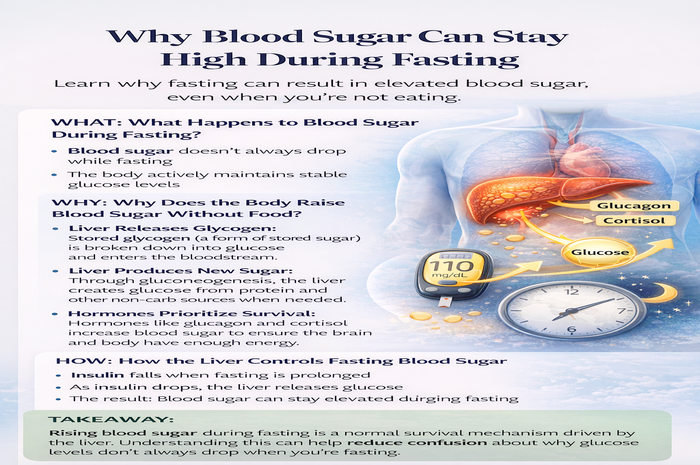
High blood sugar during fasting can feel confusing, especially when you haven’t eaten anything., blood glucose can remain stable — or even rise — during fasting. This often leads to confusion and the false belief that fasting “isn’t working.”
This article explains what happens to blood sugar during fasting, why it can stay high, and how the body regulates glucose without food.
What Happens to Blood Sugar During Fasting?
During fasting, blood sugar does not automatically fall to low levels. Instead, the body actively works to keep glucose within a safe range.
Key points:
- Blood sugar may remain stable or mildly elevated
- Glucose is still supplied to the brain and vital organs
- This process is controlled internally, not by food intake
Fasting changes where glucose comes from — not whether glucose exists.
Why Blood Sugar Can Stay High Without Eating
According to explanations commonly shared by Jason Fung, the body prioritizes survival during fasting.
This happens because:
One important reason is muscle insulin resistance, where muscle cells fail to absorb glucose efficiently even when insulin levels are low. When this happens, glucose remains circulating in the bloodstream instead of being stored or used for energy. This mechanism is explained in detail in our article on how insulin resistance manifests in muscle and raises blood sugar.
| Process | What the Liver Does | Effect on Blood Sugar |
|---|---|---|
| Liver Releases Stored Glucose | Breaks down stored glycogen and releases glucose into the bloodstream during fasting. | Maintains normal or slightly elevated blood sugar levels. |
| Liver Produces New Glucose | Creates glucose through gluconeogenesis using non-carbohydrate sources like amino acids. | Supplies glucose even when glycogen stores are low. |
| Hormonal Signals Increase Glucose | Rising glucagon and cortisol signal the liver to release glucose for energy needs. | Ensures steady glucose supply to the brain and vital organs. |
How the Liver Controls Blood Sugar During Fasting
Fasting shifts hormonal balance:
- Insulin levels fall
- Glucagon levels rise
- Liver glucose output increases
This same liver-driven glucose release is also responsible for early-morning blood sugar elevations, commonly known as the dawn phenomenon, where glucose rises despite not eating overnight.
As insulin drops, the liver is no longer suppressed and releases glucose into the bloodstream. This is why fasting blood sugar can remain elevated even without eating.
Why This Doesn’t Mean Fasting Is Failing
A higher fasting glucose reading does not automatically mean insulin resistance is worsening.
Important context:Hormones play a major role in this process. Stress hormones such as cortisol and glucagon signal the liver to release glucose during fasting to protect vital organs. When cortisol signaling is impaired or imbalanced, blood sugar regulation can become unpredictable, as explained in our article on low cortisol and adrenal insufficiency and its effects on blood sugar.
- Short-term glucose levels fluctuate
- Long-term fasting improves insulin sensitivity
- Fat loss and metabolic health improve over time
Single glucose readings should not be interpreted in isolation.
Key Takeaway
Blood sugar can stay high during fasting because the liver actively releases and produces glucose to protect vital organs. This response is normal and driven by hormonal signals, not by food intake.
Understanding this process helps reduce confusion and prevents misjudging the effectiveness of fasting on metabolic health.