

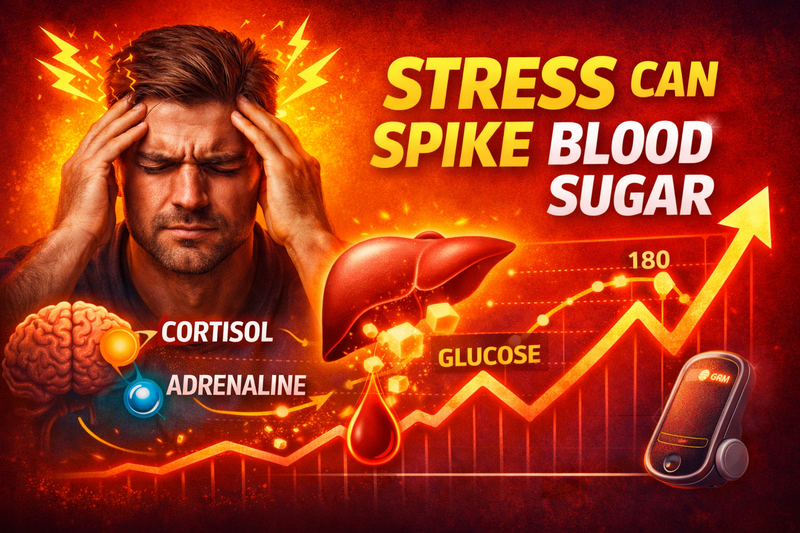
Stress can raise your blood sugar even when you have not eaten anything. If you have ever wondered why stress raises blood sugar even if you don’t eat, the answer often starts with stress hormones like cortisol and adrenaline. Many people blame food for every glucose spike, but stress can quietly push blood sugar higher on its own. If you notice high fasting glucose, random sugar spikes, or unusual readings after a stressful day, stress may be the hidden reason.
What Happens in Your Body During Stress
When you feel stressed, your body switches into survival mode. Your brain activates the stress response system and signals the release of hormones like cortisol and adrenaline. These hormones are designed to help you react quickly in dangerous situations.
According to Cleveland Clinic, cortisol is known as the stress hormone and helps regulate how your body uses glucose (sugar) for energy.
Your body thinks you may need extra energy to run, fight, or respond fast. To prepare for that, it tells your liver to release stored glucose into your bloodstream. This means your blood sugar can rise even if you have not eaten a meal or snack.
That is why stress can create a blood sugar spike without food.
Can Stress Raise Blood Sugar Without Eating?
Most people think blood sugar only rises after eating carbohydrates or sugary foods. But stress changes that. During stressful moments, your body creates more available fuel by increasing glucose in the blood.
This can happen:
- early in the morning
- after emotional stress
- during poor sleep
- after a stressful phone call
- during illness or physical strain
- even while fasting
This is also why some people notice that blood sugar rises in the morning even when they did not eat late the night before.
In simple words, your body is reacting to stress, not to food.
The Role of Cortisol and Adrenaline in Blood Sugar Spikes
Cortisol and adrenaline are the two main stress hormones involved in this process.
Cortisol
Cortisol helps your body stay alert during stress. But when cortisol stays high for too long, it can make blood sugar harder to control. It can also make your body less responsive to insulin over time.
Adrenaline
Adrenaline acts fast. It tells your body to release quick energy immediately. One of the easiest ways for your body to do that is by pushing more glucose into the bloodstream.
A similar hormone effect can happen during fasting, which is why energy can rise without food in some people.
Together, these hormones can raise blood sugar even if your meal was healthy or if you skipped food completely.
Why Stress Makes Healthy Meals Look Like the Problem
Sometimes people eat a low-carb meal, avoid sugar, and still see a glucose spike. That can be confusing. But stress can make your body react differently to the same meal.
On a calm day, the same dinner may cause a small rise. On a stressful day, the exact same dinner may create a much larger spike because stress hormones are already pushing glucose upward.
This is why stress is often the missing piece in blood sugar control.
Signs Stress May Be Affecting Your Blood Sugar
You may want to look at stress more closely if you notice:
- high blood sugar after a healthy meal
- elevated fasting glucose in the morning
- overnight glucose spikes
- blood sugar rises after emotional stress
- cravings for sweets during anxious periods
- more unstable energy during stressful weeks
If these changes happen overnight, it may help to understand why blood sugar rises at night in some people.
These patterns can happen even in people who are not diabetic.
How to Lower Stress-Related Blood Sugar Spikes
The good news is that simple daily habits can help calm the stress response and support steadier blood sugar.
1. Practice Slow Breathing
Deep breathing can calm the nervous system quickly. A simple method is box breathing: inhale for 4 seconds, hold for 4, exhale for 4, and hold for 4. Repeat for a few minutes.
2. Get Morning Sunlight
Spending 10 to 15 minutes outside in the morning may help support a healthier cortisol rhythm. This can make your stress response more balanced throughout the day.
3. Choose Gentle Movement
Walking, stretching, or yoga can reduce stress without putting too much strain on the body. Gentle movement often works better than intense exercise when stress is already high.
4. Limit Constant Notifications
Frequent alerts and screen interruptions can create ongoing micro-stress. Turning off unnecessary notifications can help your mind feel calmer.
5. Support Blood Sugar With Smart Foods
When stress is high, cravings often rise too. Focus on foods that help you feel steady:
- protein-rich foods first at meals
- magnesium-rich foods like spinach, avocado, and pumpkin seeds
- omega-3 foods like salmon, sardines, and walnuts
- calming herbal teas like chamomile or tulsi
- enough water and electrolytes throughout the day
Why This Matters for Long-Term Health
Stress is not just a mental issue. Chronic stress can affect metabolism, sleep, hormones, inflammation, and energy levels. Repeated blood sugar spikes may slowly increase your risk of insulin resistance and other metabolic problems over time.
That is why managing stress is not just about feeling better. It is also about protecting your blood sugar and your long-term health.
Final Thoughts
If you have been wondering why your blood sugar rises even when you do not eat, stress may be the answer. Your body can release glucose during stressful moments because it is trying to protect you, even if there is no real danger.
Food still matters, but stress matters too. If you want steStress can raise your blood sugar even when you have not eaten anything. If you have ever wondered why stress raises blood sugar even if you don’t eat, the answer often starts with stress hormones like cortisol and adrenaline. Many people blame food for every glucose spike, but stress can quietly push blood sugar higher on its own. If you notice high fasting glucose, random sugar spikes, or unusual readings after a stressful day, stress may be the hidden reason.adier blood sugar, do not just look at what is on your plate. Also look at your sleep, your stress, your schedule, and how often your body feels “on alert.”
Sometimes the biggest blood sugar trigger is not what you ate. It is what you are carrying.
FAQs
Can stress raise blood sugar without eating?
Yes. Stress hormones like cortisol and adrenaline can signal your liver to release glucose into the bloodstream, even if you have not eaten.
Why is my blood sugar high in the morning when I did not eat late?
Stress, poor sleep, and natural hormone changes can all contribute to higher morning blood sugar, even without a late-night meal.
Can stress cause blood sugar spikes after healthy food?
Yes. Stress can make the same meal produce a bigger glucose response than it would on a calm day.
Is stress-related high blood sugar only a problem for diabetics?
No. Even people without diabetes can experience stress-related blood sugar spikes.
What is the best way to reduce stress-related glucose spikes?
Slow breathing, better sleep, morning sunlight, gentle walking, and balanced meals with protein can all help support steadier blood sugar.