
Table of Contents
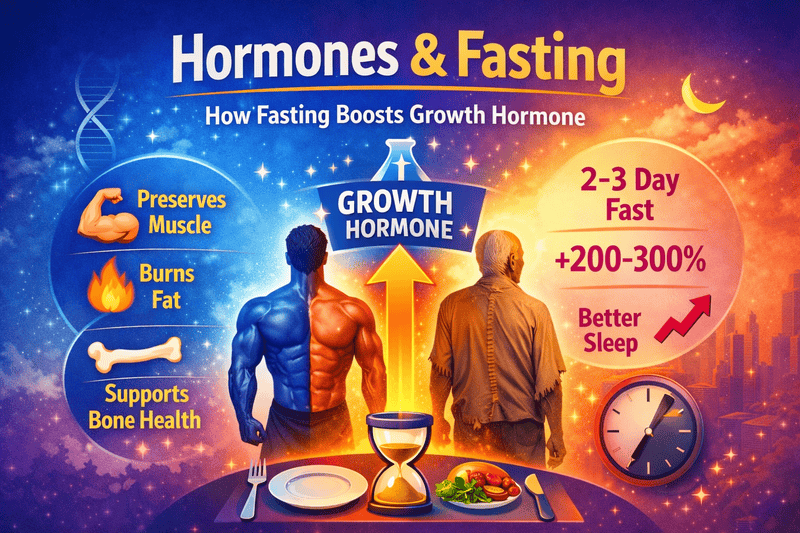
Fasting doesn’t just affect hunger — it can also influence important hormones that help protect muscle, support fat burning, and maintain a more youthful body. One of the most talked-about hormones in this area is growth hormone.
Growth hormone naturally peaks during puberty and gradually declines with age. As levels fall over time, this may contribute to visible and physical changes such as reduced muscle mass, weaker joints, lower bone density, thinner skin, and slower recovery.
That’s one reason fasting has attracted attention. Some research and educational discussions suggest that short-term fasting may significantly increase growth hormone levels, which could help the body preserve muscle and use stored fat more efficiently.
What Is Growth Hormone?
Growth hormone is a natural hormone made by the pituitary gland. Despite the name, it’s not just about growing taller during youth.
In adults, growth hormone helps support:
- Muscle preservation
- Fat burning
- Bone strength
- Protein maintenance
- Collagen production
- Skin and tissue repair
Because of these roles, lower growth hormone levels over time may be linked with some of the common effects of aging.
How Fasting May Increase Growth Hormone
One of the most interesting claims around fasting is that not eating for a period of time may trigger a rise in growth hormone.
According to the transcript:
- A 2-day fast may increase growth hormone by around 200%
- A 3-day fast may increase it by around 300%
- Some reports suggest a 7-day fast may cause a much larger spike
The main idea is that when food intake stops — especially frequent eating and carbohydrate intake — the body shifts into a different metabolic state. During that state, hormones that support fat usage and muscle preservation may become more active.
Why the Body Might Do This
A common fear is:
“If I fast, won’t I lose muscle?”
Short-term fasting doesn’t automatically mean muscle loss.
When the body still has enough stored fat available, it can often use that energy first instead of breaking down muscle tissue. This is believed to be part of a natural survival response that helped humans go through periods without food in the past.
In simple terms:
- Stored fat = preferred backup fuel
- Muscle = something the body tries to protect (at least short-term)
That’s why some experts argue that short-term fasting may preserve muscle better than constantly eating small low-calorie meals.
Growth Hormone and Muscle Preservation
Growth hormone is often discussed as a muscle-protective hormone.
According to the transcript, fasting may help by:
- Reducing protein breakdown
- Supporting lean muscle preservation
- Helping the body avoid unnecessary muscle loss during short-term food restriction
This matters because many people assume fasting instantly causes the body to “eat muscle,” but that’s not usually how short-term fasting works — especially when body fat stores are still available.
What Lowers or Raises Growth Hormone?
The transcript highlights a few lifestyle factors that may influence growth hormone levels:
Things that may support growth hormone:
- Fasting
- High-intensity interval training (HIIT)
- Quality sleep
Things that may suppress growth hormone:
- Frequent eating
- High carbohydrate intake
- Chronic stress
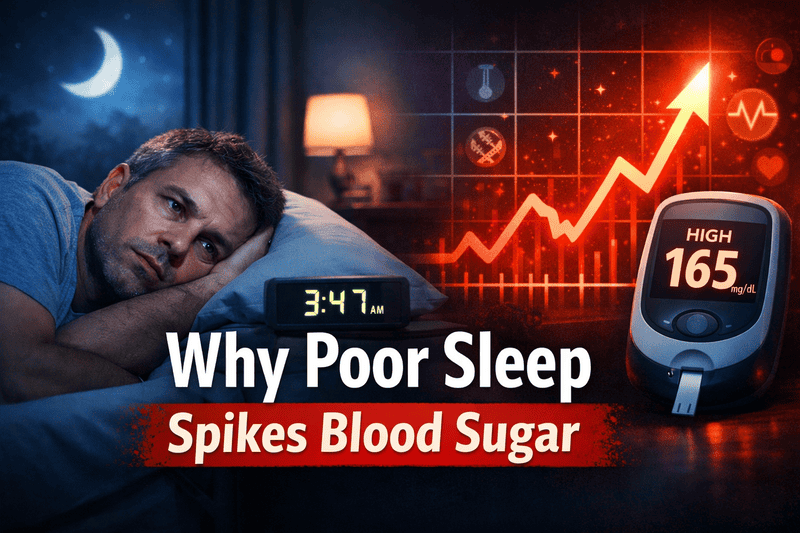
Growth hormone also naturally rises during sleep, which is one more reason rest is often emphasized in recovery and metabolic health discussions. Since sleep also plays a major role in metabolism, you may also want to read our guide on how sleep affects blood sugar levels.
Do You Need Protein During a Fast?
Some people worry they need:
- protein shakes,
- amino acids,
- or branched-chain amino acids (BCAAs)
…just to protect muscle during fasting.
But the transcript suggests that you may not need constant protein intake during a fast, as long as your regular meals provide enough total protein overall.
A rough guideline mentioned is:
- 0.6 to 0.8 grams of protein per pound of body weight per meal
This is presented as a general estimate, not a strict rule. Protein needs can vary depending on:
- age,
- body size,
- metabolism,
- activity level,
- and health status.
Practical Takeaways
If your goal is to support muscle while fasting, the transcript’s core advice is simple:
- Get enough protein in your eating window
- Avoid constant snacking
- Use fasting strategically
- Exercise regularly
- Consider HIIT if appropriate
- Prioritize sleep
- Keep stress under control
- Avoid excess refined carbs
This combination may help create a hormonal environment that supports fat loss without unnecessary muscle loss.
Important Reminder
While fasting may influence hormones in beneficial ways for some people, it is not right for everyone.
Fasting may require caution if you have:
- diabetes,
- a history of eating disorders,
- are underweight,
- are pregnant or breastfeeding,
- take blood sugar medications,
- or have certain medical conditions.
If fasting is new to you, it’s best to start gradually and consider speaking with a qualified healthcare professional first. For a broader evidence-based overview, Harvard Health also explains that intermittent fasting may offer benefits for some people, but it is not suitable for everyone.
Bottom Line
Fasting may do more than reduce calorie intake — it may also change your hormonal environment. If you’re exploring how the body responds during fasting, you may also find it helpful to read why some people feel cold during fasting.
One of the most interesting effects is its potential impact on growth hormone, a hormone linked to:
- muscle preservation,
- fat burning,
- collagen support,
- and healthy aging.
Short-term fasting appears to encourage the body to protect lean tissue while relying more on stored fat, which helps explain why many people use fasting as part of a body composition or metabolic health strategy.
In short: fasting doesn’t just change when you eat — it may also change how your body protects muscle and uses energy.
Q&A
1. Does fasting really increase growth hormone?
Short-term fasting may increase growth hormone levels, especially when insulin stays low and the body shifts toward using stored fat for energy.
2. Why does growth hormone matter during fasting?
Growth hormone may help the body preserve muscle, support fat burning, and reduce unnecessary protein breakdown during short-term fasting.
3. Will fasting make me lose muscle?
Not necessarily. During short-term fasting, the body often uses stored fat first, which may help protect lean muscle mass when enough body fat is available.
4. Does eating lower growth hormone?
Growth hormone is generally lower after eating, especially after meals high in carbohydrates, because insulin rises.
5. Can fasting help with fat loss because of hormones?
Yes, one reason fasting may support fat loss is that it can create a hormonal environment that favors fat burning instead of constant energy storage.
6. What other habits may support growth hormone naturally?
Good sleep, high-intensity exercise (HIIT), lower stress, and avoiding constant snacking may help support healthier growth hormone patterns.
7. Do I need protein shakes during a fast to protect muscle?
Usually not during the fasting window. What matters more is getting enough total protein during your eating window.
8. Is fasting safe for everyone?
No. Fasting may not be suitable for people with diabetes, eating disorder history, pregnancy, breastfeeding, underweight status, or certain medications/medical conditions.
9. Does growth hormone naturally decrease with age?
Yes. Growth hormone levels generally decline over time, which is one reason muscle loss, slower recovery, and body composition changes may become more noticeable with aging.
10. What is the main takeaway about fasting and hormones?
Fasting doesn’t just affect calories — it may also influence hormones like growth hormone, which can help the body manage energy use, preserve muscle, and support fat metabolism.