
Table of Contents
When people think about blood sugar, they often focus only on how much sugar a food contains. But in real life, that is only part of the story.
Two foods can contain similar carbohydrates and still affect your body very differently. That is because the form of the food matters, not just the carb count. A whole food usually behaves differently in your body than an ultra-processed one.
That is one reason why an apple usually affects blood sugar differently than apple juice, and why oats often behave differently than sugary breakfast cereals.
If you want a simple rule that actually makes sense, it is this:
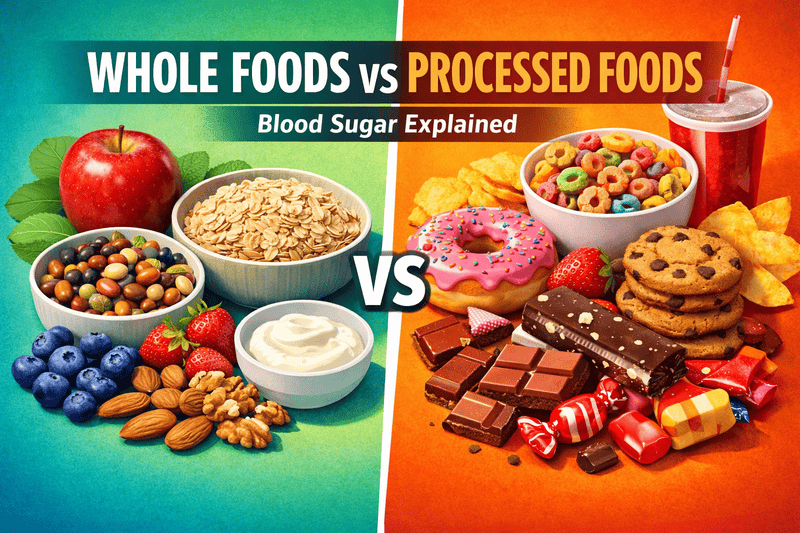
The closer a food is to its natural form, the more likely it is to support steadier blood sugar.
What Are Whole Foods and Processed Foods?
Whole foods are foods that still look close to how they came from nature. These include things like:
- vegetables
- fruits
- beans and lentils
- oats
- nuts and seeds
- eggs
- fish
- plain yogurt
Minimally processed foods are still fairly close to their natural form, but they may be frozen, dried, pasteurized, or milled to make them safer, easier to store, or easier to eat.
Examples include:
- frozen vegetables
- plain yogurt
- whole oats
- whole grain flour
- canned beans with simple ingredients
The video transcript we reviewed explains that some food processing is normal and even helpful. In fact, humans have been processing foods like grains, meats, vegetables, and fruits for thousands of years. The real difference is how much processing a food goes through and what gets added along the way.
Ultra-processed foods are different. These are often industrially made foods designed for convenience, shelf life, and strong taste. They may include ingredients that are rarely used in normal home cooking.
Examples include:
- sugary cereals
- pastries
- soft drinks
- chips
- instant soups
- candy
- nuggets
- packaged snack foods
- sweetened breakfast bars
According to the transcript, ultra-processed foods are often made to be highly appealing, easy to overconsume, and heavily marketed, while being nutritionally weaker than whole or minimally processed foods.
Why Whole Foods Usually Cause a Gentler Blood Sugar Response
Whole foods often contain fiber, water, natural structure, and sometimes protein or healthy fats. These features slow down digestion and help glucose enter the bloodstream more gradually.
That means:
- slower absorption
- smaller blood sugar spikes
- better fullness after eating
- fewer cravings later
For example:
- Whole fruit usually digests more slowly than fruit juice
- Steel-cut oats usually digest more slowly than sweetened cereal
- Beans usually digest more slowly than white crackers
- Plain potatoes eaten with protein and fiber often behave differently than processed fries or chips
This is one of the biggest reasons whole foods often feel more “stable” in the body. They usually make you feel fuller for longer, and they do not hit your system as fast as highly refined foods.
The transcript also notes that whole or minimally processed foods are more likely to nourish you and satisfy hunger, which matters because better satiety often reduces overeating.
Why Processed Foods Can Spike Blood Sugar Faster
Ultra-processed foods are often stripped of the natural food structure that helps slow digestion.
They may contain:
- added sugars
- refined flour
- refined starches
- sweeteners
- flavor enhancers
- modified fats
- ingredients designed to improve texture and shelf life
When foods lose fiber and natural structure, they are often absorbed faster. That can lead to:
- quicker glucose rise
- sharper insulin demand
- energy crashes later
- stronger hunger soon after eating
The transcript describes ultra-processed foods as products that are often nutritionally unbalanced, easy to overconsume, and built for convenience, taste, and long shelf life. It also points out that these foods can displace healthier whole foods and may contribute to excess weight when eaten too often.
That matters for blood sugar because blood sugar control is not just about one meal. It is also about what foods become the foundation of your regular eating pattern.
If most of your meals come from foods that digest quickly and leave you hungry again, it becomes much harder to maintain stable energy and consistent eating habits.
Why an Apple Is Not the Same as Apple Juice
This is one of the easiest ways to understand the whole idea.
A whole apple contains:
- natural fruit sugar
- fiber
- water
- chewing resistance
- more fullness
Apple juice may still come from fruit, but it often removes much of the fiber and makes the sugar easier to absorb quickly.
So even though both come from apples, they can affect your body very differently.
This same logic applies to many foods:
- whole oats vs sugary cereal
- whole fruit vs fruit snacks
- beans vs crackers
- baked potato vs potato chips
- plain yogurt vs dessert yogurt
The food’s structure matters.
Do You Need to Avoid All Processed Foods?
No — and that is important.
Not all processed foods are bad.
The transcript makes this very clear: some processing is okay and can even make foods safer, more practical, or more useful in daily life. It specifically notes that foods like frozen vegetables, pasteurized yogurt, and whole oats can still fit well into a healthy eating pattern.
That means you do not need to become obsessive.
A better goal is:
Make whole or minimally processed foods the foundation of your meals most of the time.
That is a much more realistic and sustainable rule than trying to chase a perfect diet.
Simple Food Swaps That May Support Better Blood Sugar
If you want a practical place to start, focus on easy swaps:
- Sugary cereal → oats
- Fruit juice → whole fruit
- Chips → nuts or roasted chickpeas
- Sweetened yogurt → plain yogurt with fruit
- Packaged snack bars → apple with peanut butter
- White crackers → beans, lentils, or whole-food snacks
You do not need to change everything at once.
Even one or two better swaps per day can make your meals feel more filling and more stable.
Key Takeaway
Whole foods usually affect blood sugar differently because they are digested more slowly and are less likely to cause a fast glucose spike.
They often contain more fiber, more natural structure, and fewer added sugars or refined ingredients.
Ultra-processed foods are often easier to overeat, easier to absorb quickly, and more likely to trigger stronger blood sugar swings.
That does not mean every processed food is harmful.
It simply means this:
If most of your meals are built around foods that still look like real food, your blood sugar usually has a better chance of staying steadier.
Quick Q&A
Do whole foods always have less sugar than processed foods?
Not always. Some whole foods like fruit naturally contain sugar. But they usually also contain fiber, water, and nutrients that slow digestion and reduce the chance of a sharp blood sugar spike compared with sugary processed snacks or drinks.
Are all processed foods bad for blood sugar?
No. Some processed foods can still be useful and balanced, such as plain yogurt, frozen vegetables, canned beans, and oats. The bigger concern is ultra-processed foods that contain added sugars, refined starches, and highly engineered ingredients.
Why do ultra-processed foods often make people overeat?
They are often designed to be very tasty, convenient, and easy to consume quickly. The transcript explains that these foods are often built to be highly appealing and can encourage people to eat more than they need.
What is the easiest first blood sugar-friendly swap?
A very easy first step is replacing fruit juice with whole fruit or sugary cereal with oats. These simple swaps often improve fullness and reduce fast glucose spikes.
Bottom Line
If nutrition advice feels confusing, remember this one rule:
The more your food looks like real food, the better chance it has of supporting steadier blood sugar.
You do not need a perfect diet.
You just need a better default.
Make whole or minimally processed foods the base of your meals most of the time, and let ultra-processed foods become the occasional extra—not the main event.
For more guidance on healthy eating and blood sugar, the American Diabetes Association is a reliable authority source:
https://diabetes.org/food-nutrition